
Sex During Pregnancy: How a Wedge Makes It More Comfortable
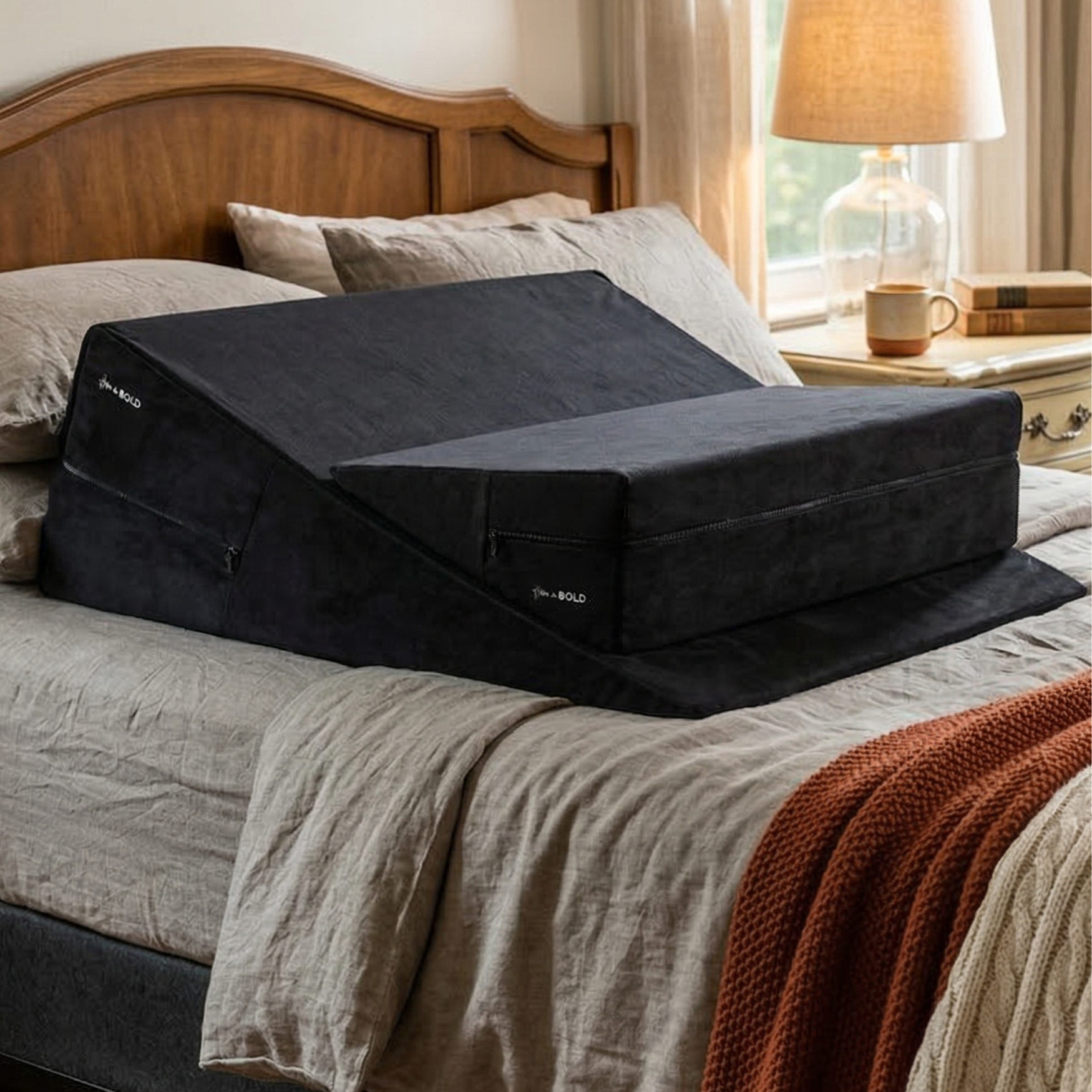
Sex during pregnancy is healthy, encouraged by most OBs, and increasingly physically complicated as the pregnancy progresses. The second and third trimesters introduce a growing abdomen, shifted center of gravity, increased pelvic pressure, tender breasts, and ligament looseness that makes certain positions uncomfortable in new ways. A positioning wedge addresses several of these challenges simultaneously.
Why Standard Positions Become Difficult
Missionary becomes uncomfortable once the abdomen is large enough that lying flat causes a heavy, awkward sensation — and the penetrating partner’s weight on or near the bump is a concern. Doggy style requires sustained kneeling on sore joints with an awkward weight distribution. Partner-on-top becomes unstable as the center of gravity shifts. Most couples resort to spooning by default — which works but is limited in its variety.
A wedge and ramp expand what’s available significantly during all three trimesters.
Best Configurations During Pregnancy
Side-lying with wedge: The classic pregnancy configuration. Spooning with the wedge between the knees supports the upper leg, reduces hip pressure, and creates the access needed for side-entry without the upper leg needing to be held in the air. Many pregnant women find this the most comfortable position throughout the entire second and third trimesters.
Pregnant partner over the ramp (modified): In early pregnancy, lying chest-down over the ramp works. As the bump grows, a modified version — resting on the side near the edge of the ramp with hips elevated — accommodates the abdomen without pressure. This requires some experimentation to find the right position.
Pregnant partner on ramp incline, face-up: Lying on the ramp at an incline (rather than flat) reduces the heaviness that a fully flat position creates in later pregnancy. Many pregnant women find a slight incline more comfortable than fully supine. The ramp creates this naturally.
Couples who invest in a positioning set during pregnancy typically find it extends their active intimate life well into the third trimester. See it on Amazon.
What to Avoid
After the first trimester, sustained positions flat on the back are generally advised against due to vena cava compression. The ramp’s inclined position addresses this. Deep penetration should be adjusted with angle changes to avoid cervical pressure — the wedge gives you fine control over entry angle, which makes it easier to find angles that feel comfortable without deep cervical contact.
Communication Becomes Even More Important
Pregnancy changes the body in week-to-week ways. What was comfortable last week may not be this week. The positioning set is a tool for finding new comfortable configurations as the pregnancy progresses — not a fixed solution. Keep communicating and keep experimenting.
Get the Wedge & Ramp Combo
Frequently Asked Questions
Is sex safe during a normal pregnancy?
Yes — for uncomplicated pregnancies, sex is safe throughout. Your OB will tell you if there are specific restrictions based on your situation.
What’s the most comfortable sex position in the third trimester?
Side-lying (spooning) with a wedge or firm pillow between the knees is the most consistently comfortable across the third trimester. It requires no sustained positions and puts minimal pressure on the abdomen.
Can lying flat during sex hurt the baby?
After about 20 weeks, sustained lying flat on the back can compress the vena cava, reducing blood flow. Brief positioning is generally fine; the ramp’s incline avoids this for longer sessions.
Will a wedge put pressure on my belly?
Not if you’re using it correctly — the wedge supports the hips, not the abdomen. Side-lying positions put the bump to the side, not against any surface.
When can I resume normal sex positions after birth?
Most OBs recommend waiting 6 weeks postpartum before penetrative sex, regardless of birth method. Your body’s healing takes priority. The positioning set becomes useful again at that point for managing any postpartum discomfort.