
Sex After 60: A No-Nonsense Guide to Comfortable Intimacy
The cultural assumption that sex is primarily for the young is both wrong and quietly damaging. Research consistently shows that many people in their 60s and 70s report satisfying intimate lives — often more satisfying in emotional terms than at any earlier point. The real challenge isn’t desire or connection. It’s that bodies in their 60s have genuine physical needs that most bedroom setups don’t accommodate. That’s a solvable problem.
What’s Actually Different at 60
By 60, most people are dealing with at least one of the following: arthritic joints (particularly hips and knees), reduced hip flexor flexibility, post-menopausal vaginal changes including dryness and tissue fragility, lower testosterone affecting both desire and erection quality in men, or recovery from a health event like a hip replacement, cardiac procedure, or cancer treatment. Often several of these at once.
The bedroom positions that require kneeling for extended periods, deep hip flexion, or sustained muscle effort under load become genuinely difficult — not uncomfortable in a way that disappears after a few tries, but structurally difficult because the body’s physical capabilities have shifted. The gap between what people want to do and what their bodies can comfortably sustain is where intimacy quietly shrinks for many couples in their 60s.
See the Wedge & Ramp Combo on Amazon
What a Wedge and Ramp Actually Change
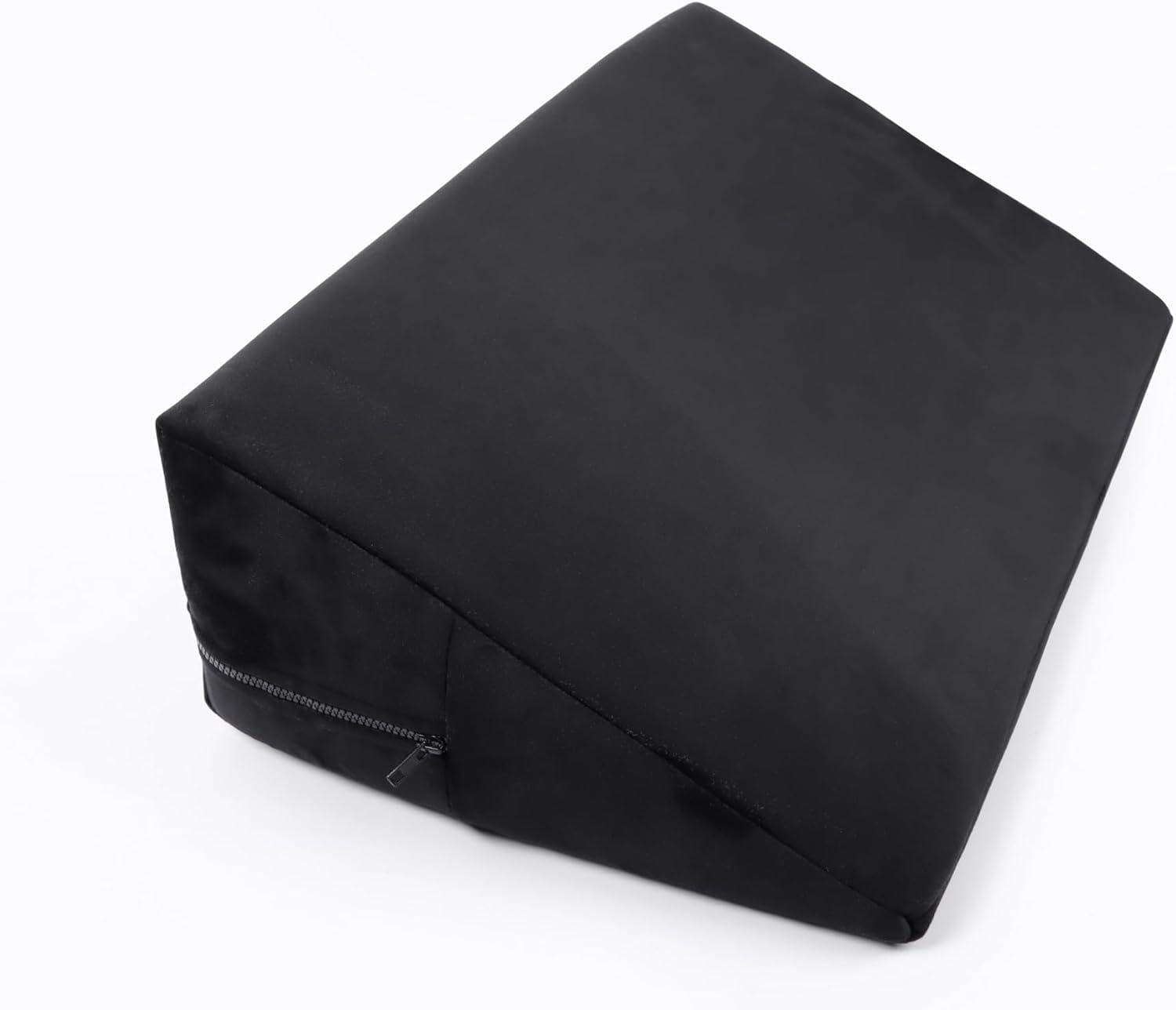
A positioning wedge under the receiving partner’s hips in missionary or rear-entry positions removes the need to arch, tilt, or maintain hip elevation through muscle effort. The foam holds the angle — the body rests into it. This single change eliminates much of the back and hip strain that makes these positions impractical for many people over 60.
The ramp is particularly valuable for 60+ couples. It provides a full-body angled surface that supports the receiving partner lying chest-down, without requiring them to brace on hands or knees. For people with joint issues, this is often the difference between rear-entry positions being accessible or not. The giving partner also benefits — kneeling on a ramp rather than a flat mattress is dramatically easier on knees.
The GloryHoleToGo combo uses high-density foam that holds body weight without compressing flat — critical for anyone who needs genuine support rather than another pillow that deflates in five minutes. See it on Amazon.
Positions That Work Best for Bodies Over 60
Wedge under hips, missionary: The most accessible starting point. No strain on the receiving partner. The giving partner can lower their body weight to some degree rather than holding themselves up — which helps with shoulder and arm fatigue.
Ramp, receiving partner chest-down: Fully supported. No kneeling required. The angle promotes natural penetration without forcing any joint into deep flexion. For people with hip replacements, this needs to respect surgeon-specified movement restrictions — check those first.
Side-lying with wedge between knees: Side positions are already lower-impact. Adding a wedge between the knees of the receiving partner maintains hip alignment without requiring them to hold their top leg in place. Extended side-lying intimacy is significantly more comfortable with that support.
The Conversation Worth Having
One of the most common dynamics in 60+ couples is one partner quietly withdrawing from intimacy because it hurts or exhausts them, without fully explaining why. The other partner often interprets this as loss of interest. Adding positioning furniture sometimes works as a practical fix but equally as an invitation to have a direct conversation about what’s actually needed physically. If you’re looking for a way to introduce the topic, our guide on how to suggest a sex wedge to your partner covers the conversation without making it clinical. For people specifically navigating arthritis, see our dedicated arthritis guide.
Get the Wedge & Ramp Combo
Frequently Asked Questions
Is a sex wedge safe after hip replacement surgery?
It can be, but the specifics depend on your surgeon’s movement restrictions — particularly hip flexion limits in the first 6–12 months. Get clearance from your surgeon and describe the positions you’re considering. The wedge often helps precisely because it keeps hips within safe range rather than forcing deep flexion.
How does the wedge help with post-menopausal intimacy discomfort?
Positioning can shift the angle of penetration to reduce deep-thrust pressure, which is one source of post-menopausal discomfort. It works best alongside other management strategies — lubricant, topical estrogen if prescribed, and pacing.
What if one partner has significantly reduced mobility?
The ramp is usually more useful than the wedge in this case because it provides full-body support. The less mobile partner can be positioned on the ramp with minimal adjustment required from them once they’re in place.
Can the foam support heavier body weights?
High-density foam holds its shape under extended body weight — this is the key difference between a proper sex wedge and a regular foam pillow. The GloryHoleToGo combo uses the same density foam as premium brands for this reason.
Is intimacy after 60 really common?
Yes — consistently so in the research. Studies show that a significant proportion of adults in their 60s and 70s remain sexually active. The drop-off in activity is more strongly linked to partner availability and health than to age-based loss of desire.