
Reigniting Intimacy After a Dry Spell: What Couples Actually Do
Dry spells — periods where a couple’s sexual intimacy stops or significantly slows — are far more common than people admit. Stress, kids, illness, life transitions, and the quiet accumulation of unresolved tension all contribute. What’s less talked about is how to actually restart, not just theoretically but practically. The answer is almost never “just do it” — and it involves more than a romantic weekend away.
Why Dry Spells Persist Longer Than They Should
The longer a dry spell runs, the more weight it accumulates. What started as a few weeks of busyness becomes a month, then several months, and at some point the absence itself starts to feel like a statement. Bringing it up feels risky. Initiating feels vulnerable. Both partners often want the same thing — a return to closeness — but neither quite knows how to make the first move without it being heavy or awkward.
A second pattern is the physical unfamiliarity that builds. Bodies change; what worked before might feel different now. The expectation that things should just “click” the way they used to can create pressure that makes the first attempt feel worse than it needed to, which delays the next attempt.
See the Wedge & Ramp Combo on Amazon
What Actually Works to Restart
Lower the stakes of the first attempt. Framing it as “let’s try something new” rather than “let’s go back to how things were” removes the burden of comparison. A dry spell often ends more successfully when the first encounter is explicitly exploratory rather than trying to reproduce a previous baseline.
Make it easy to say yes. The friction of initiation — who brings it up, how, the risk of rejection — is often what keeps a dry spell going. Reducing that friction matters. Some couples find that having a tangible “we bought something new to try” removes the awkwardness entirely. It’s a shared action rather than a one-sided request.
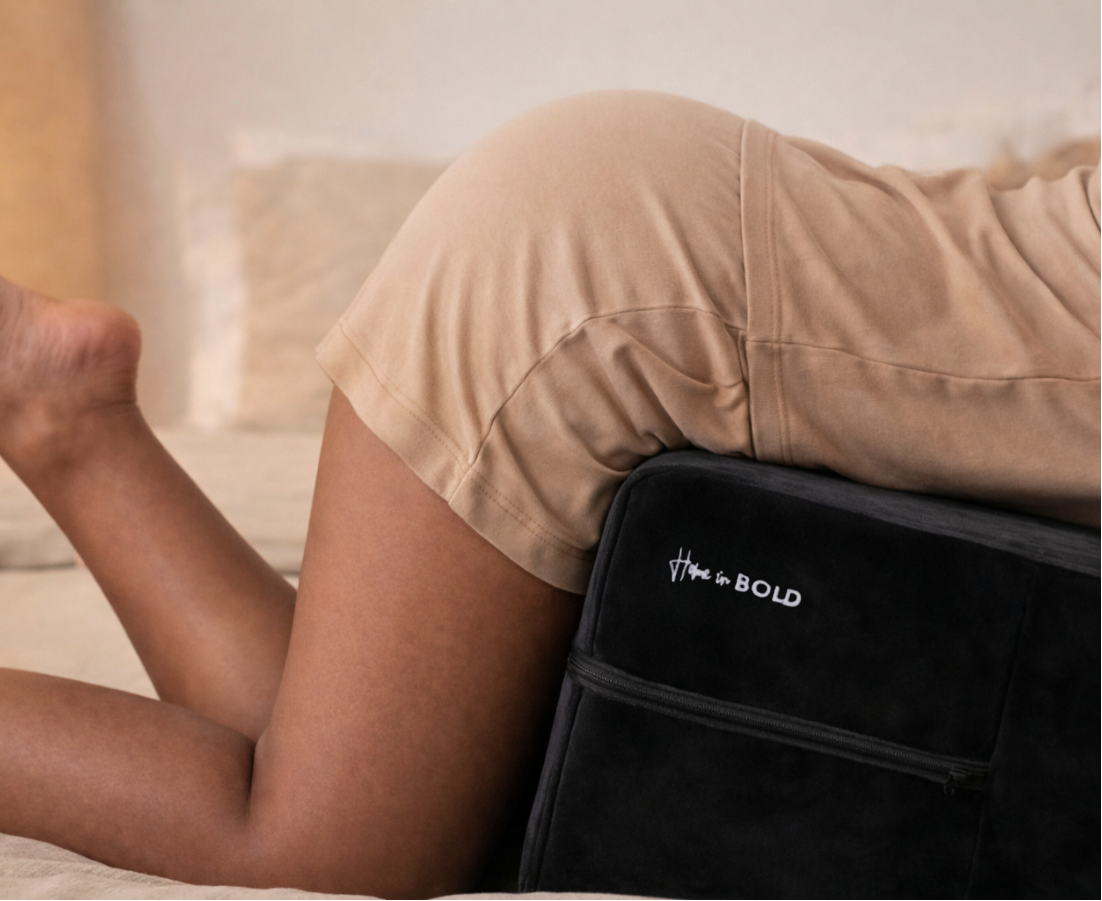
Address the physical side-effects of the gap. Bodies after a dry spell benefit from patience and explicit comfort. Positions that prioritize comfort and ease over novelty or performance tend to work better for re-entry. A positioning wedge is useful here because it makes the most accessible, comfortable positions — missionary, side-lying — work better than they do without support.
Couples who frame the return to intimacy as something new — not a return to something old — report better outcomes. A new piece of furniture or a new position is a low-key way to make that framing real. See the combo on Amazon.
The Role of a Sex Wedge in Restarting Intimacy
A positioning wedge works on the re-entry problem in two ways. First, practically: comfortable positions are easier to maintain without physical strain, which means less likelihood that discomfort cuts things short and creates another negative experience. Second, psychologically: “we got something to try” is a much lower-stakes conversation opener than “we need to talk about why we haven’t been intimate.” The purchase itself signals openness and intent without requiring a heavy conversation.
If you’re not sure how to introduce the idea, our guide on suggesting a sex wedge to your partner covers the conversation in detail. For couples navigating the reconnection period after kids specifically, see our article on postpartum intimacy.
Get the Wedge & Ramp Combo
Frequently Asked Questions
How long is a “dry spell”?
There’s no clinical definition — it’s relative to what’s normal for each couple. What matters is whether the gap feels like a problem to both people, not how long it’s been by someone else’s standard.
Is it normal for long-term couples to have dry spells?
Very common. Research consistently shows that sexual frequency fluctuates in long-term relationships and that periods of low or no activity are experienced by the majority of couples at some point.
Should I just initiate directly, or plan something?
Both approaches work for different couples. What research suggests is that removing as much friction and pressure from the first attempt as possible is the most important factor — whether that means planning a specific evening or making a low-key, low-pressure move.
What if the first attempt doesn’t go well?
Treat it as useful information, not a verdict. Discuss what felt off without making it about the person. The second attempt is almost always easier than the first.
When should we consider professional support?
If the dry spell is rooted in unresolved conflict, mismatched desire levels that aren’t improving, or significant emotional distance, a couples therapist or sex therapist can address the underlying dynamics more directly than any physical tool can.