
The Butterfly Position: Why a Wedge Makes It Dramatically Better
By Jake Turner · Senior Editor · January 2026
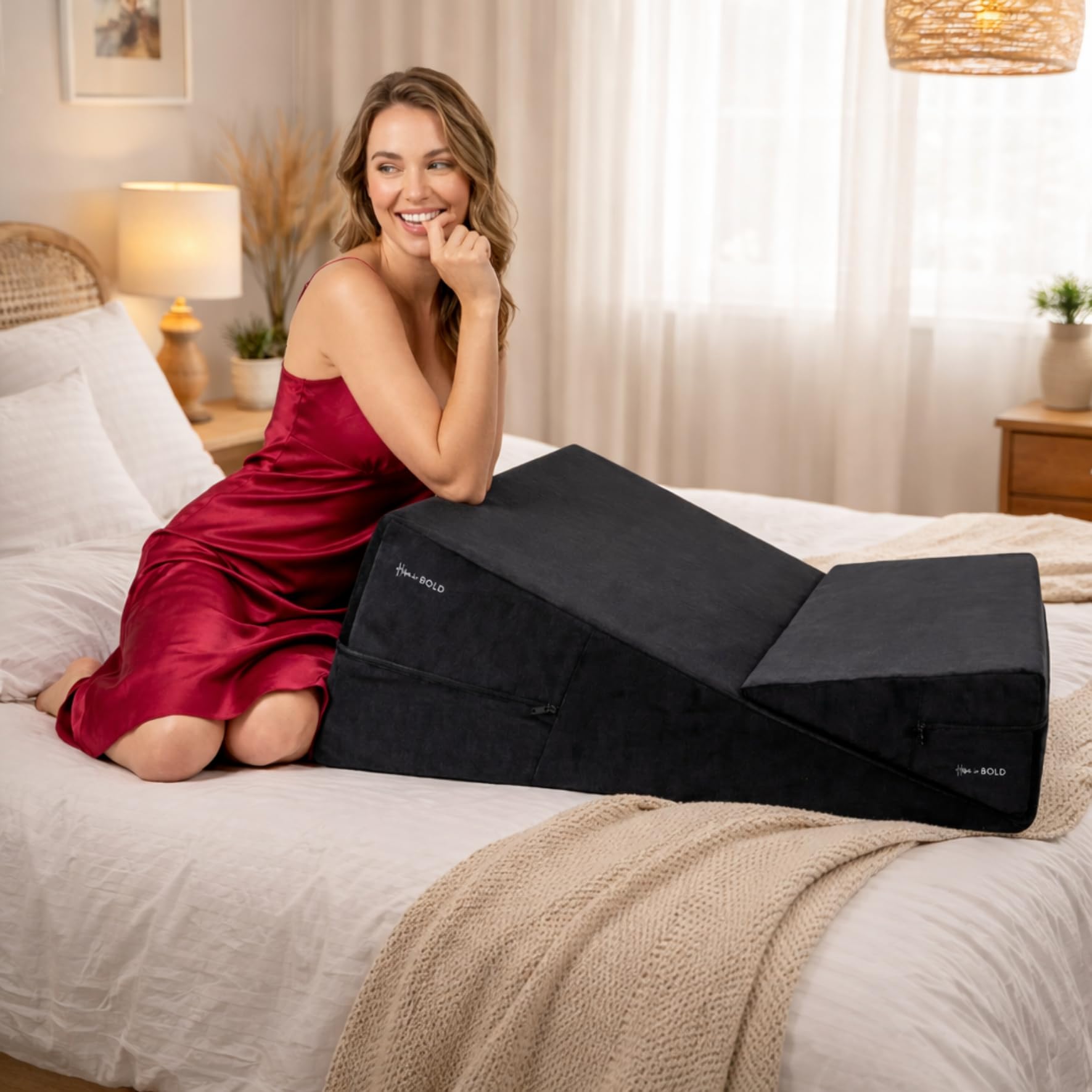
The butterfly position — receiving partner on their back at the edge of a surface with hips elevated and legs resting on the penetrating partner’s shoulders or chest — is consistently rated as one of the most intense penetration experiences available. The angle it creates puts the penetrating partner in near-vertical alignment with the vaginal or anal canal, producing depth and anterior-wall contact simultaneously. The catch: it requires hip elevation to achieve properly. Without it, it’s awkward. With a wedge, it’s excellent.
In This Article
Why the Butterfly Position Works
In the butterfly position, the receiving partner lies on their back with their hips at the edge of a bed or surface, legs elevated and resting on the standing or kneeling partner’s shoulders. This creates a steep pelvic tilt that angles the vaginal or anal canal so that penetration simultaneously contacts the anterior wall (G-spot zone for vaginal penetration) and achieves maximum depth. The penetrating partner controls movement entirely from a standing position, which gives them significantly more leverage than the same dynamic in bed. Many people who have never experienced this position describe their first attempt as revelatory. Healthline’s butterfly position guide covers the basic setup; we’re covering the optimised version here.
Why Hip Elevation Is Non-Negotiable
Without hip elevation, the receiving partner’s pelvis is flat on the surface and their legs have nowhere comfortable to rest without the penetrating partner either crouching (painful after 30 seconds) or the legs being held (tiring). The position technically works without elevation, but the penetrating partner’s angle is suboptimal and the depth advantage is significantly reduced. Hip elevation via a wedge does three things: it raises the receiving partner’s pelvis to the standing partner’s natural genital height (eliminating the height-mismatch problem we detail in our standing sex positions guide), tilts the pelvic canal for anterior-wall contact, and creates a stable platform that doesn’t shift during vigorous movement.
The Ideal Butterfly Setup With a Wedge
Place the wedge on the edge of the bed with the thicker end extending slightly off the mattress edge. The receiving partner lies back with their lower back and hips on the wedge, their body on the bed, and their legs raised. The penetrating partner stands at the edge of the bed — the wedge height brings the receiving partner’s hips to approximately standing genital height. Legs can rest on shoulders, be held at the ankles, or rest naturally depending on flexibility and preference. The position creates simultaneous deep penetration and G-spot/anterior wall pressure, which is why it’s so frequently described as producing intense or quick orgasm. Our G-spot stimulation guide explains the anterior wall mechanics in detail.
Butterfly Variations
Legs together butterfly: Both legs together on one shoulder, creating a tighter entry angle and different sensation. Spread butterfly: Legs open and down rather than elevated, receiving partner completely open — less depth but more clitoral accessibility. Use the wedge under hips for either. Prone butterfly: Receiving partner face-down, hips elevated on wedge, legs together — this is essentially the prone bone position with elevated hips, creating a closed-entry variant. We cover this specifically in our prone bone position guide.
| Setup | Depth Achieved | G-Spot Contact | Penetrating Partner Effort | Rating |
|---|---|---|---|---|
| Butterfly, no elevation | Moderate | Low-moderate | High (crouching) | ★★★☆☆ |
| Butterfly, pillow under hips | Good | Moderate | Moderate | ★★★☆☆ |
| Butterfly, at bed edge, no wedge | Good | Moderate | Moderate | ★★★☆☆ |
| ⭐ Butterfly + wedge at bed edge (Our Pick) | Maximum | Excellent | Low (standing height) | ★★★★★ |
Try the Wedge & Ramp Combo on Amazon
The butterfly position produces very deep penetration — which feels excellent but can cause discomfort if the penetrating partner thrusts against the cervix or anal fornix. Communication and starting with shallow-to-moderate depth before going deeper prevents this.
Related Articles
Our Pick: Wedge & Ramp Combo Set
Perfect butterfly elevation · firm stable foam · washable cover
Frequently Asked Questions
Jake Turner
Senior Editor · GloryHoleToGo
Jake has spent over a decade reviewing sexual wellness products, positioning aids, and intimacy furniture. His recommendations draw on hands-on product testing, consultation with certified sex therapists, and analysis of thousands of verified buyer reviews.