
Sex After Weight Loss Surgery: What Changes and What Actually Helps
By Jake Turner · Senior Editor · February 2026
Bariatric surgery — including gastric bypass, sleeve gastrectomy, and gastric band — is increasingly common, with over 250,000 procedures performed annually in the US. The relationship between bariatric surgery and sexual health is complex and generally positive in the long term, but the transition period involves specific physical changes, surgical recovery restrictions, and psychological adjustments that affect intimacy. This guide addresses both the recovery period and the longer-term picture.
In This Article
Short-Term Recovery and Sexual Activity
Most bariatric surgery procedures are laparoscopic, and the recovery arc is faster than open abdominal surgery. Surgeons typically clear patients for light sexual activity at 4–6 weeks post-op, with full activity at 8–12 weeks depending on the procedure and individual healing. The main restrictions: no positions placing direct pressure on the upper abdominal incision sites, no sustained core tension (similar to C-section recovery), and managing the physical fatigue of the immediate post-surgical period. The American Society for Metabolic and Bariatric Surgery provides post-operative guidance worth reviewing alongside your surgeon’s specific instructions.
Hormonal Changes and Their Effects
Significant rapid weight loss affects sex hormones in both men and women. In women, it often improves conditions related to excess estrogen and androgen (PCOS, irregular cycles, reduced fertility) and can increase libido. In men, weight loss improves testosterone levels that excess fat tissue had suppressed, typically improving erectile function and libido. However, the transition period can be unsettling — body image is changing rapidly, some nutritional deficiencies (particularly B12, iron, zinc) can affect energy and mood, and the psychological adjustment to a changing body takes time. The Obesity Medicine Association addresses the sexual health dimension of obesity treatment comprehensively.
How Sexual Function Typically Improves
The research on bariatric surgery and sexual health is consistently positive in the medium to long term. Studies show significant improvements in sexual desire, arousal, satisfaction, and function 6–12 months after surgery for most patients. Reduced body weight improves physical mobility, stamina, and access in sexual positions — many couples find a wider range of positions become accessible post-surgery that weren’t practical before. Our guide to sex positioning for plus-size couples covers the pre-surgery positioning landscape; post-surgery, many of those considerations diminish as mobility improves.
Positioning During Weight Transition
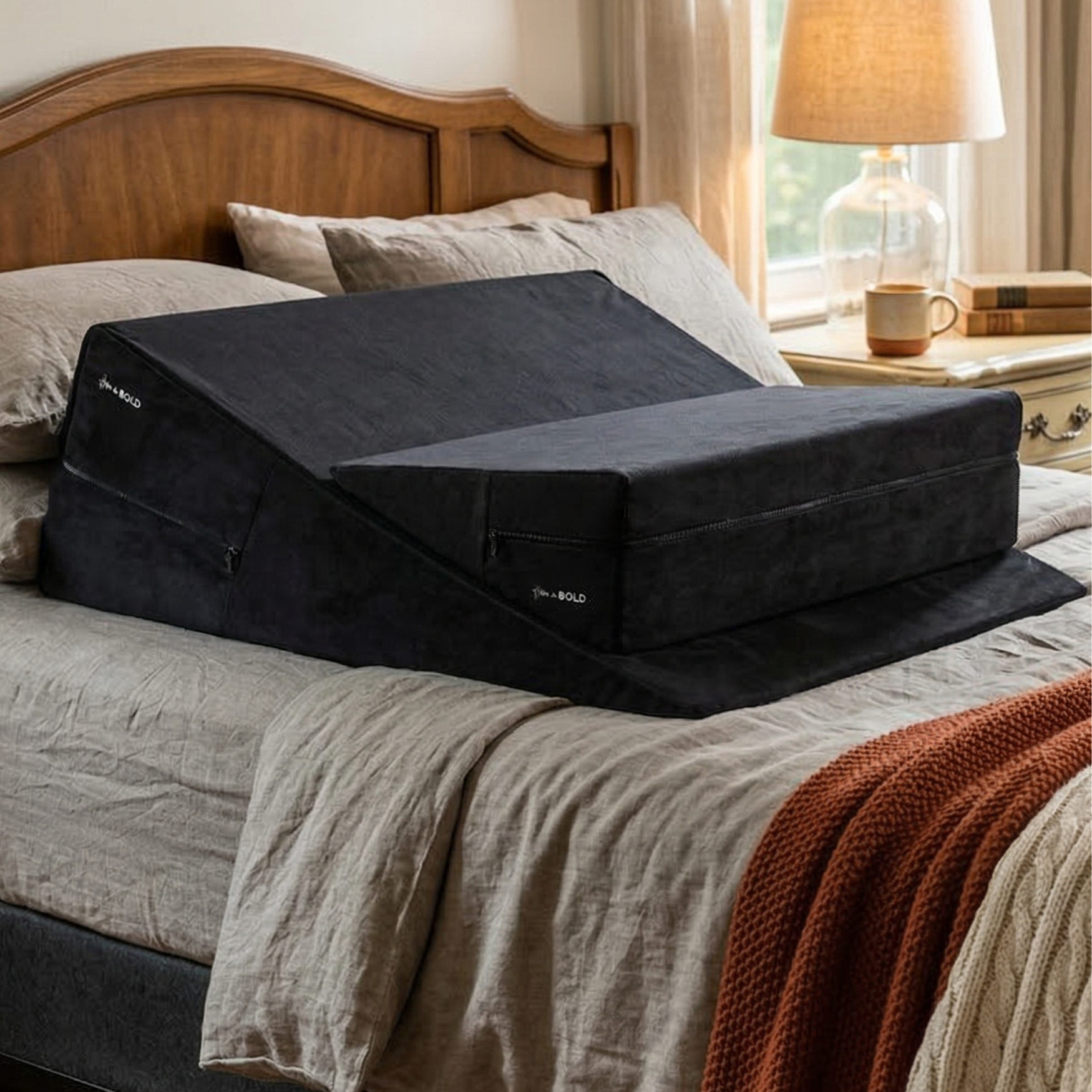
During the weight transition — which can take 12–18 months of ongoing change — positional needs may shift regularly. A positioning wedge remains useful throughout, but for different reasons at different stages: early post-op for surgical site protection and core engagement reduction; during active weight loss for improving access and angle in positions that were previously difficult; long-term as a general quality-enhancer. Side-lying positions are consistently recommended in the early recovery period for the same reasons as after C-section or hysterectomy — minimal core engagement, no abdominal pressure, good access. Our spooning position guide remains the top recommendation for the immediate recovery period.
| Stage | Physical Capability | Positioning Priority | Recommended Setup |
|---|---|---|---|
| 0–6 weeks post-op | Limited | Incision protection, no core tension | Non-penetrative; side-lying only |
| 6–12 weeks | Improving | Low effort, no abdominal pressure | Spooning + wedge between knees |
| 3–12 months (active weight loss) | Expanding | Access improvement as mobility increases | Wedge under hips; range expanding |
| ⭐ 12+ months (stable weight) | Often significantly improved | General quality enhancement | Full wedge & ramp versatility |
See the Wedge & Ramp Combo on Amazon
Nutritional deficiencies after bariatric surgery — particularly B12, iron, and zinc — can cause fatigue and mood effects that reduce libido and sexual energy. Staying on top of supplementation as directed by your bariatric team matters for sexual health as much as general health.
Related Articles
Our Pick: Wedge & Ramp Combo Set
Supports you through the transition · adapts to your changing body
Frequently Asked Questions
Jake Turner
Senior Editor · GloryHoleToGo
Jake has spent over a decade reviewing sexual wellness products, positioning aids, and intimacy furniture. His recommendations draw on hands-on product testing, consultation with certified sex therapists, and analysis of thousands of verified buyer reviews.