
Complete Guide to Sex Toy Hygiene: Cleaning Methods, Schedules, and Storage
By Jake Turner · Senior Editor · April 2025
Sex toy hygiene protects against bacterial vaginosis, yeast infections, UTIs, and STI transmission. The evidence on this is clear and practical: non-porous materials cleaned consistently with appropriate cleaners pose minimal health risk; porous materials require more vigilance; and storage conditions affect whether a cleaned toy stays clean. This is the complete guide.
In This Article
Why Hygiene Matters
Inadequately cleaned sex toys can harbor bacteria (including E. coli, Staphylococcus), yeast (Candida albicans), and in the case of shared toys, viruses. Peer-reviewed research consistently demonstrates microbial contamination on uncleaned toy surfaces. The health consequences range from minor (irritation, yeast infection) to significant (bacterial vaginosis, UTI, STI transmission between partners). The risks are not theoretical — they’re well-documented in the clinical literature on sex toy hygiene.
What to Clean With
Sex toy cleaner (spray or foam): The standard recommendation. Formulated for toy materials, typically pH-balanced, fragrance-free, and free of ingredients that damage silicone. Works on all toy materials.
Warm water + mild soap: Appropriate for non-porous materials. Avoid heavily fragranced soaps, antibacterial soaps with triclosan, or harsh surfactants that leave residue on silicone.
Isopropyl alcohol (70%): Effective disinfectant for ABS and silicone surfaces. Wipe on, allow to air dry. Do not use on porous materials (absorbs into pores). Do not use on flexible silicone frequently — dries out silicone over time.
Bleach solution (10%): Sterilization-level cleaning for non-porous materials (silicone, stainless steel). Requires thorough rinsing to remove residue. Not for routine use — reserve for sterilization situations.
What NOT to use: Scented soaps, shampoo, conditioner, household cleaners, perfume, WD-40, or petroleum-based products. All either damage toy materials or leave residue that causes irritation.
Cleaning Methods by Material
Non-porous silicone: Water + toy cleaner. IPX7 toys can be cleaned under running water. Boiling is an option for non-motorized silicone.
Stainless steel: Water + soap, boiling, bleach solution, or dishwasher (no soap). Most cleaning-tolerant material.
ABS plastic: Wipe with toy cleaner spray or damp cloth. Do not submerge electronics-containing ABS toys.
TPE/TPR (porous): Warm water with soap-free cleaner, thorough rinse, complete air dry. Cannot be sterilized. Consider condom use as standard practice.
Borosilicate glass: Same as stainless steel — water, soap, boiling, bleach all acceptable.
How Often to Clean
The consistent standard: clean after every use, before storage. Clean before first use of a new toy. Clean before use if a toy has been stored unwrapped for more than a week (dust and ambient bacteria settle on surfaces). For toys stored in covered compartments or pouches, cleaning before first use after extended storage is recommended as good practice.
Storage Hygiene
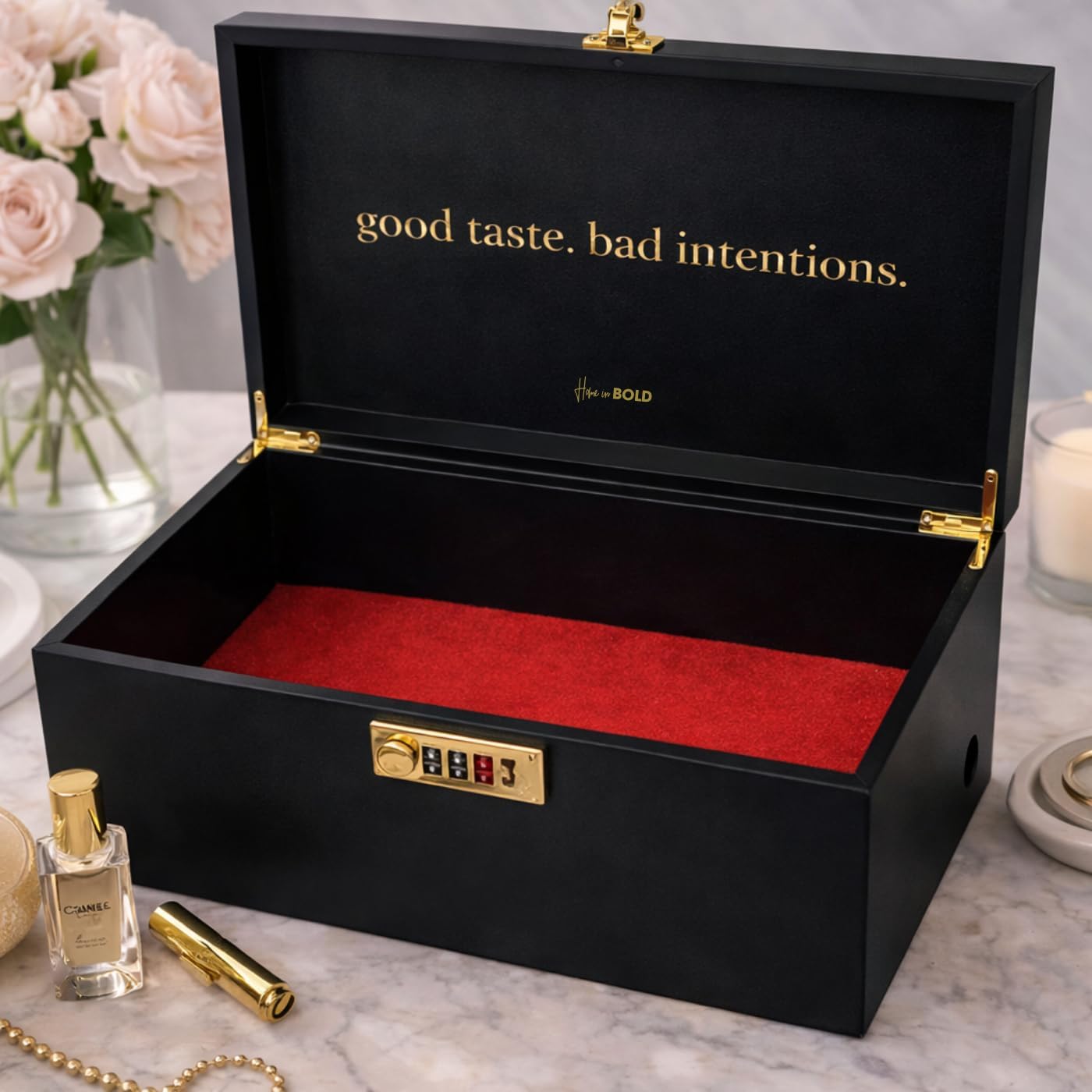
Storage affects whether a cleaned toy stays clean. Key rules: store in a covered, clean container (not open-air); separate silicone from silicone (chemical interaction); keep TPE away from everything (porous materials need air but shouldn’t touch other surfaces); and lock the container to prevent contact from others in the household. The Home in Bold box addresses all of these: covered, lockable, velvet-lined, with removable dividers for separation.
| Cleaner | Appropriate Materials | Notes |
|---|---|---|
| Sex toy cleaner | All materials | First choice for routine cleaning |
| Warm water + mild soap | Non-porous materials | Rinse thoroughly — remove all soap residue |
| Isopropyl 70% | ABS, silicone (surface) | Don’t use on porous materials |
| 10% bleach solution | Silicone, stainless steel (sterilization) | Thorough rinse required after |
| Boiling | Non-motorized silicone, stainless steel, glass | Full sterilization — 3–5 minutes |
Maintain Hygiene With Proper Storage
A clean toy stored poorly becomes contaminated again. The Home in Bold box keeps cleaned toys separated, covered, and locked.
Related Articles
Complete Hygiene Starts With Proper Storage
Covered, locked, separated by material. One box for your whole collection.
Frequently Asked Questions
Jake Turner
Senior Editor · GloryHoleToGo
Jake has spent over a decade reviewing sexual wellness products and storage solutions. His brand care guides draw on official manufacturer documentation, direct product testing, and consultation with sex educators. Where manufacturer specifications were unavailable or varied by model, this is noted explicitly in the article.