
Body Confidence and Sex: Positions That Feel Better in Your Own Skin
By Jake Turner · Senior Editor · February 2026
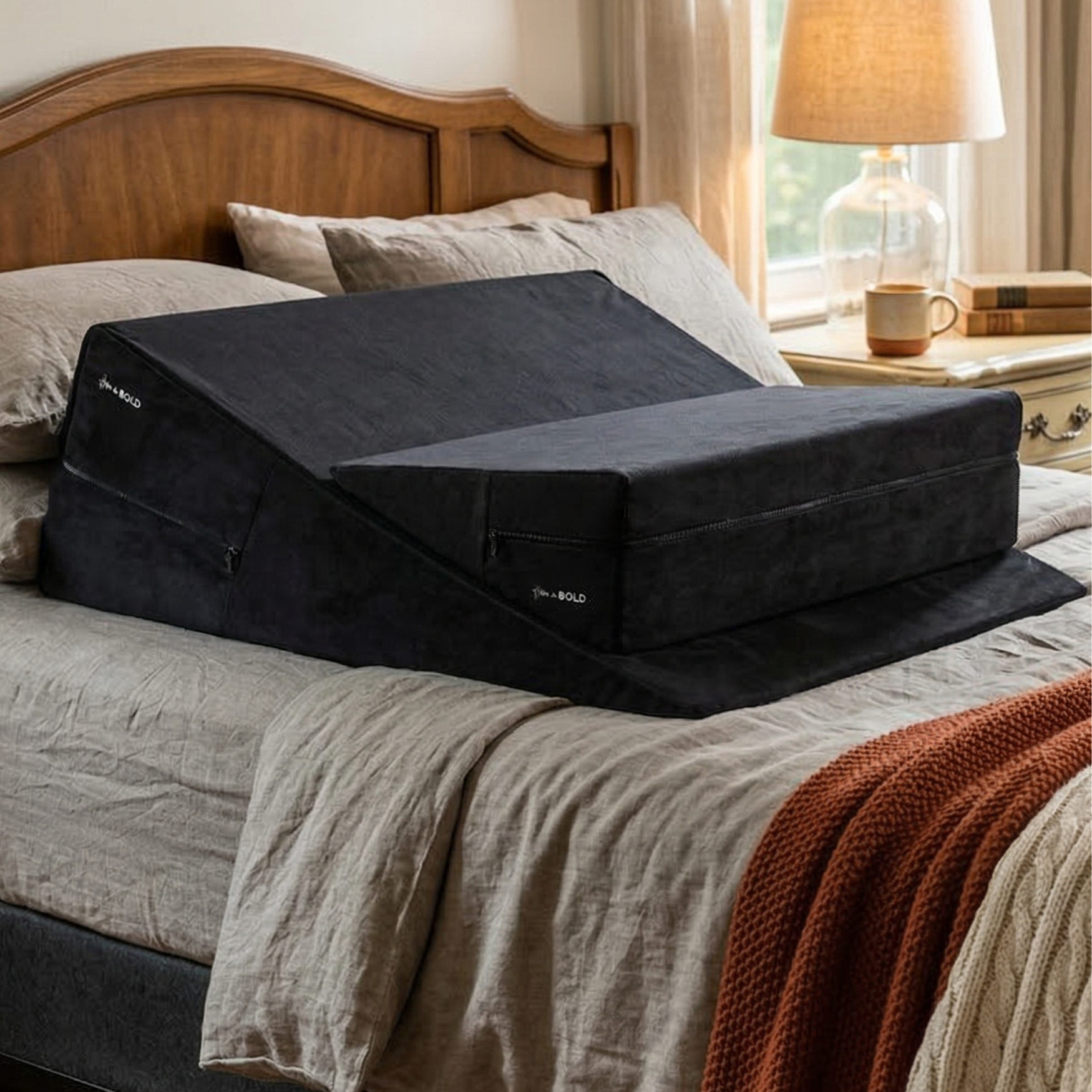
Research consistently shows that negative body image is one of the strongest predictors of sexual dissatisfaction — more predictive than physical fitness, age, or relationship length. The positions we choose in sex, the lighting we use, the physical effort they require — all of these interact with how we feel about our bodies. This isn’t a guide about fixing body image (that’s deeper work). It’s about reducing the physical factors that can amplify self-consciousness during sex.
In This Article
What the Research Says About Body Image and Sex
A 2012 study in the Journal of Sexual Medicine found that women with higher body esteem reported more frequent orgasms and greater sexual satisfaction, independent of partner relationship quality. Negative body image activates what researchers call spectatoring — a cognitive process where part of the mind is observing and judging one’s own body during sex rather than being present in the experience. Psychology Today’s overview of body image covers this research well. The implications for positioning: reducing visual exposure of areas of self-consciousness, reducing physical effort that draws attention to body mechanics, and choosing positions that feel physically comfortable all reduce the cognitive load of spectatoring.
Positions That Reduce Body Visibility Anxiety
Face-down positions (prone bone, modified doggy style) place the receiving partner’s body against a surface — reducing their own visibility while allowing them to focus on sensation rather than appearance. Side-lying positions (spooning) create a similar effect — both partners oriented the same direction, with less full-body exposure than face-to-face positions. Modified missionary with dim or low lighting is specifically reported as a positive-body-image context by many people — it allows intimacy without spotlight visibility. We’re not suggesting people should avoid feeling seen during sex — but having positions where visibility is naturally reduced allows confidence to build before gradually becoming more comfortable with full visibility.
How Physical Effort and Discomfort Amplify Self-Consciousness
Physical strain during sex — holding a difficult position, working against gravity, muscular effort that produces laboured breathing not from arousal — activates exactly the same kind of body-conscious attention that spectatoring produces. When the body is working hard in an effortful position, it’s difficult not to be aware of it. Low-effort positions supported by a wedge shift attention back to sensation rather than effort. This is a practical tool for people who find that body image concerns are most intense during positions requiring muscular exertion. See also our lazy sex positions guide for the full low-effort position breakdown.
How a Wedge Helps Beyond Just Angle
A wedge reduces the physical effort required to maintain positions, which reduces the body-mechanical awareness that can feed self-consciousness. It also improves sensation quality — which, when the sensory experience is better, naturally pulls attention toward pleasure and away from self-evaluation. Partners who experience stronger physical response are generally less preoccupied with how they look during that response. This is a practical feedback loop worth understanding: better position → better sensation → more presence in the experience → less self-conscious observation of the body.
| Position | Body Visibility | Effort Required | Sensation Quality With Wedge | Body Confidence Context |
|---|---|---|---|---|
| Standard missionary | Full front visibility | Low-moderate | Moderate → High with wedge | Moderate |
| Cowgirl, no support | Full visibility + effort visible | High | Good → Excellent with wedge | Challenging if self-conscious |
| Doggy style, no support | Low visibility (face-down) | Moderate | Good → Excellent with wedge | Good |
| Spooning | Low visibility (same direction) | Very low | Moderate → Good with wedge | Excellent |
| ⭐ Prone bone + wedge | Very low visibility | Very low | Excellent | Best for body image concerns |
See the Wedge & Ramp Combo on Amazon
Body image work — therapy, self-compassion practices, addressing the underlying beliefs — is worth pursuing alongside practical positioning strategies. The two are complementary; the positioning helps in the moment, while longer-term work changes the underlying relationship with one’s body.
Related Articles
Our Pick: Wedge & Ramp Combo Set
Supports sensation over effort · reduces self-consciousness · washable
Frequently Asked Questions
Jake Turner
Senior Editor · GloryHoleToGo
Jake has spent over a decade reviewing sexual wellness products, positioning aids, and intimacy furniture. His recommendations draw on hands-on product testing, consultation with certified sex therapists, and analysis of thousands of verified buyer reviews.