
How to Clean Sex Toys Without Toy Cleaner: Safe Substitutes by Material
By Jake Turner · Senior Editor · May 2025
Running out of dedicated sex toy cleaner doesn’t mean you can’t clean your toys safely — but it does mean you need to know which substitutes are material-safe and which ones will damage your toys. This guide covers the safe alternatives, ranked by material type and cleaning situation, and explains what commonly available household products are specifically unsafe for sex toy materials.
In This Article
First Choice: Dedicated Toy Cleaner
Dedicated sex toy cleaners exist because they are formulated specifically for toy materials — they clean effectively without leaving residue, are pH-balanced for body safety, and don’t contain surfactants or alcohols that dry out silicone over repeated use. If you’re between cleaner orders, the alternatives below work. If you’re regularly cleaning toys without dedicated cleaner, consider stocking a backup spray bottle.
Mild Soap and Water — Best General Substitute
For non-porous toy materials (silicone, ABS, stainless steel, glass), mild unscented soap with warm water is the most accessible effective substitute. What “mild” means specifically: fragrance-free, dye-free, no antibacterial agents with triclosan, no heavy moisturizers. Standard fragrance-free dish soap (Dawn Free & Clear, for example) or a basic unscented hand soap works well.
Application: apply a small amount of soap to the toy surface, work it across the entire surface (including textured areas), rinse thoroughly under warm water until there is no soap residue remaining, then air dry. The rinse-thoroughly step is essential — soap residue on silicone is an irritant and can also trap bacteria.
Not appropriate for: Porous toys (TPE/TPR like Fleshlight) where soap residue becomes embedded in pores. See Fleshlight-specific care for the soap-free requirement.
Practical limitation: Over many uses, even mild soap strips trace amounts of the natural surface texture from silicone. Dedicated cleaners are gentler over time. Soap is a good backup, not a permanent replacement.
Isopropyl Alcohol 70% — Surface Disinfection
70% isopropyl alcohol (standard rubbing alcohol available at any pharmacy) is an effective disinfectant for ABS plastic toy bodies and surfaces. Apply with a cloth or cotton swab, wipe across the surface, and allow to air dry fully before use or storage.
For silicone surfaces: Occasional use is fine; frequent use dries out the silicone over time. Use as a disinfection step for occasional deeper cleaning, not routine cleaning.
For TPE/TPR surfaces: Do not use. Alcohol absorbs into porous materials and degrades TPE chemistry over time.
For ABS plastic: Effective and safe. Wipe charging contacts with alcohol on a cotton swab if corrosion is present (let dry fully before charging).
Percentage matters: 70% isopropyl is more effective as a disinfectant than 91% or 99% because the water content slows evaporation and extends contact time with pathogens. Use 70%, not higher concentrations.
Boiling — Full Sterilization for Non-Motorized Items
Boiling in water for 3–5 minutes fully sterilizes non-motorized sex toys made of silicone, stainless steel, or borosilicate glass. This is a more thorough cleaning than soap or cleaner spray — boiling water at 100°C kills all bacteria, viruses, and fungi present.
Who can use this: Non-motorized silicone dildos and plugs, stainless steel toys (Njoy Pure Wand, steel plugs), borosilicate glass toys. Tantus specifically recommends boiling in their official FAQ for non-motorized silicone products.
Who cannot use this: Any toy with a motor, battery, or electronic components. Even IPX7-rated waterproof toys can have water enter the motor housing during boiling at 100°C, which is different from submersion at normal temperature. Do not boil rechargeable vibrators regardless of their waterproof rating.
Boil in a pot of clean water, remove with tongs, place on a clean towel to cool and dry before storage.
10% Bleach Solution — Emergency Sterilization
A 10% bleach solution (approximately 1 part household bleach to 9 parts water) provides sterilization-level cleaning for non-porous materials when standard cleaning isn’t sufficient. Use cases: after anal use for sharing between partners, after visible contamination, or for storage box cleaning.
Application: submerge or wipe the toy with the bleach solution, let sit for 10 minutes, then rinse thoroughly — very thoroughly — with clean water. Bleach residue causes severe irritation. Use this as an occasional sterilization method, not routine cleaning. It’s more suited to non-motorized silicone and stainless steel than to ABS-bodied vibrators.
What Never to Use
Hand sanitizer: Most hand sanitizers contain alcohol concentrations of 60–95% plus fragrances, thickeners, and additives. The combination is too harsh for silicone surfaces and the fragrance/additive package is an irritant on toy surfaces.
Baby wipes: Contain fragrance, preservatives, and skin conditioners that leave residue on toy surfaces. Not a cleaning method — at most, a temporary wipe before proper cleaning when nothing else is available.
Dishwasher with detergent: Dishwasher detergent is formulated to cut through grease and fats with aggressive surfactants and often contains bleaching agents. Residue from dishwasher detergent is difficult to fully rinse from silicone and causes irritation. Dishwasher cycles without soap (hot water only) are appropriate for non-motorized silicone, steel, and glass — but soap in the dishwasher is problematic.
Vinegar: While occasionally suggested, vinegar is acidic and can damage silicone surface chemistry with repeated use. It is not an effective sex toy disinfectant (antimicrobial effect is limited at practical concentrations) and leaves an odor that is difficult to fully remove from silicone.
Antibacterial soap with triclosan: Triclosan is a disinfectant that contributes to antibacterial resistance and is harder to rinse fully from toy surfaces. Plain mild soap outperforms it for toy cleaning without the downsides.
Quick Reference by Material
Silicone (IPX7, motorized): Mild soap + warm water rinse, or isopropyl 70% (occasional). No boiling, no heavy alcohol cleaners.
Silicone (non-motorized): Mild soap, isopropyl 70%, boiling, or 10% bleach solution. All options are available.
Stainless steel: Any of the above including boiling and bleach. Most cleaning-tolerant material.
ABS plastic: Mild soap wipe, isopropyl 70% wipe. No submersion of electronics-containing ABS.
TPE/TPR: Warm water only, or soap-free toy cleaner. No soap, no alcohol, no bleach, no boiling.
Glass: Same as stainless steel — all options including boiling and bleach.
Proper Storage After Cleaning
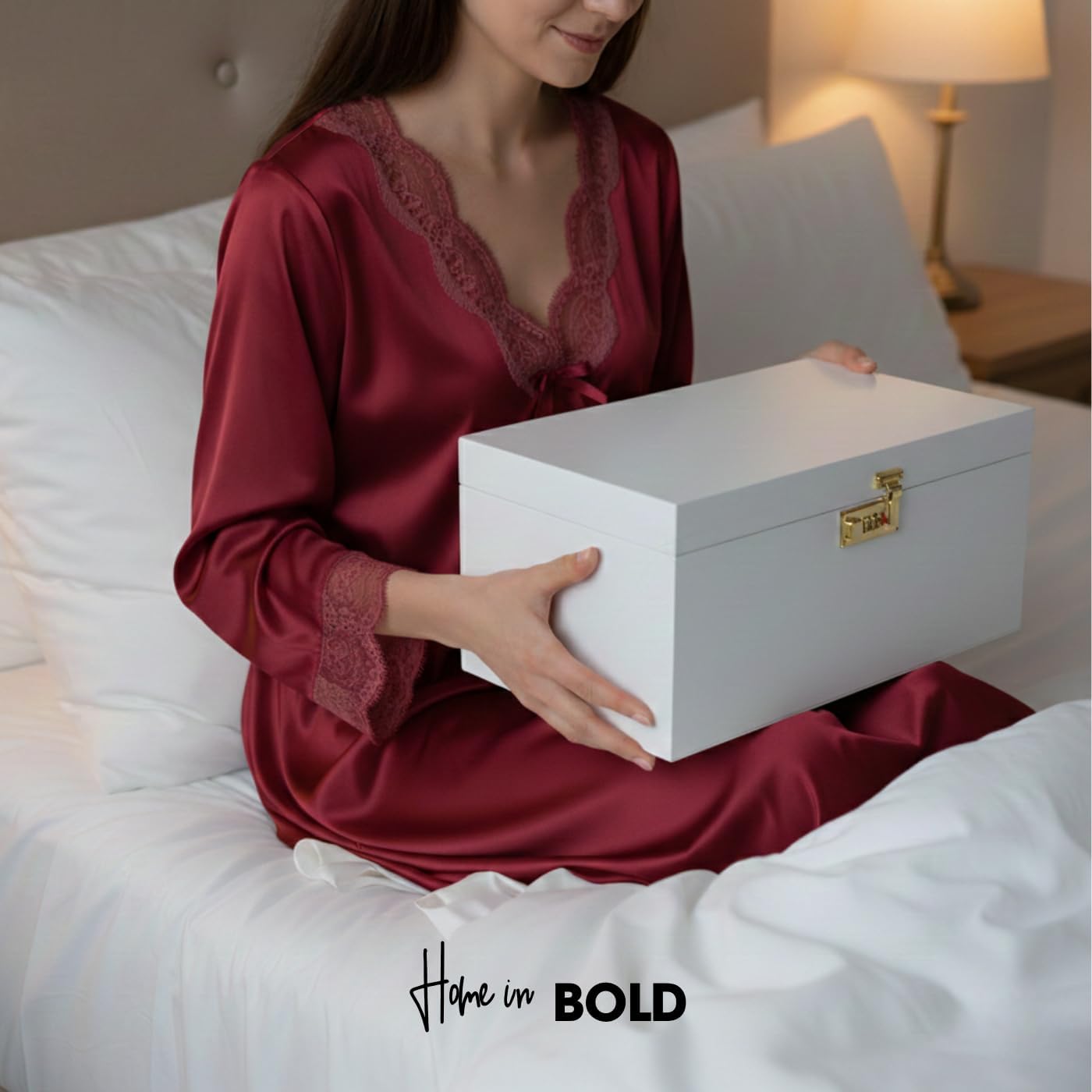
Whether you use toy cleaner or a substitute, the storage step after cleaning is equally important. A toy cleaned well and stored poorly (in contact with other silicone, in a dusty open container, or while still damp) re-contaminates quickly. After cleaning and drying, store in the Home in Bold storage box — covered, clean-lined, and locked.
| Substitute | Safe for Silicone | Safe for TPE | Safe for ABS | Sterilizes |
|---|---|---|---|---|
| Mild unscented soap + water | ✅ (rinse thoroughly) | ❌ (embeds in pores) | ✅ | No |
| Isopropyl alcohol 70% | Occasional only | ❌ | ✅ | Partial (disinfects) |
| Boiling water 3–5 min | Non-motorized only | ❌ | ❌ | Yes |
| 10% bleach + thorough rinse | Non-motorized only | ❌ | Avoid | Yes |
| Baby wipes | Emergency wipe only | Emergency only | Emergency only | No |
| Vinegar | ❌ (damages over time) | ❌ | ❌ | No |
Store Your Clean Toys in the Home in Bold Box
Even the best cleaning routine is undermined by poor storage. The Home in Bold box keeps cleaned toys covered, separated, and locked between uses.
Related Articles
Clean Toys Deserve Proper Storage
Locked. Velvet-lined. Separated compartments. One code to open.
Frequently Asked Questions
Jake Turner
Senior Editor · GloryHoleToGo
Jake has spent over a decade reviewing sexual wellness products and storage solutions. His brand care guides draw on official manufacturer documentation, direct product testing, and consultation with sex educators. Where manufacturer specifications were unavailable or varied by model, this is noted explicitly in the article.