
How to Introduce a Sex Wedge to a Partner Who’s Not Immediately Sold
By Jake Turner · Senior Editor · February 2026
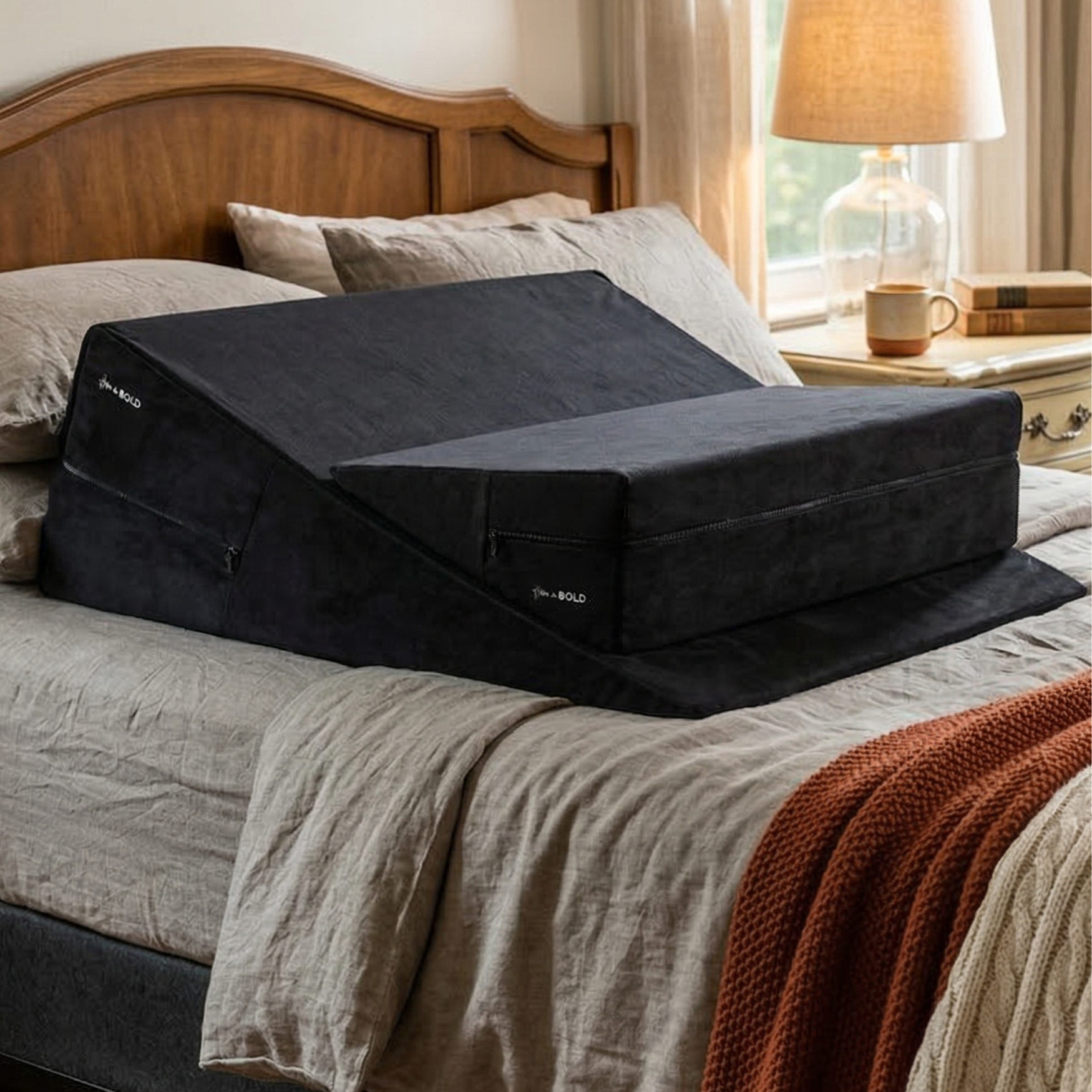
The interest in trying a sex wedge or positioning aid isn’t always mutual at the outset. One partner researches, finds compelling evidence that it would genuinely improve things, and then faces the task of introducing the idea without it feeling clinical, pressuring, or implying the sex you’re already having isn’t good enough. This guide covers how to have that conversation well — and how to frame the introduction in a way that makes a partner genuinely curious rather than defensive.
In This Article
Why Some Partners Are Resistant
Resistance to sex furniture typically comes from a few sources. First, the implication that current sex is inadequate — if a partner hears ‘I want to try a sex wedge’ as ‘our sex isn’t good enough,’ defensiveness is the natural response. Second, novelty anxiety — sex furniture feels unfamiliar and slightly clinical to people who haven’t considered it. Third, self-consciousness about what using it ‘means’ — some people associate sex aids with compensating for physical deficiency. All three of these resistances are addressable with the right framing. We covered a version of this conversation in our earlier guide to how to suggest a sex wedge — this article goes deeper on the skeptical-partner dynamic specifically.
How to Frame It (What Works, What Doesn’t)
What works: Framing it as experimentation and curiosity rather than fixing a problem. ‘I read about this and thought it might be interesting to try’ lands very differently from ‘I think this would help our sex.’ Sharing the information aspect — what a wedge actually does mechanically, why the angle matters, what the research shows about positions and sensation — appeals to partners who respond to logic and information. Framing it in terms of your own desire for sensation improvement rather than their performance is also more effective: ‘I want to try this angle’ rather than ‘I think this would help you.’ What doesn’t work: Introducing it during sex without discussion, framing it as a problem-solver for a specific complaint, or using it as part of a larger conversation about sexual dissatisfaction — that packages too much into one moment.
When and How to Bring It Up
Out of the bedroom and out of a sexual context is almost always the best timing — when both partners are relaxed, not immediately after or before sex, and with no time pressure. Showing what it actually looks like (a foam wedge with a cover that looks like furniture cushioning) removes the ‘sex dungeon equipment’ mental image some partners have. Pointing to the functional rationale — this does X mechanically, which produces Y effect — gives curious partners something concrete to evaluate. Psychology Today’s guide to talking about sex with a partner covers the broader communication framework that applies here.
Making the First Use Feel Natural
The first time using a wedge shouldn’t be a formal ‘let’s try the wedge now’ announcement in the middle of sex. Place it on the bed as part of the setup, and incorporate it naturally — ‘want to try this under your hips?’ as a question rather than a directive. If it improves things noticeably, the partner who was skeptical often converts enthusiastically after a single experience. Most resistance to sex furniture is hypothetical; actual experience with it tends to resolve the concern quickly.
| Approach | Partner Reception | Conversation Difficulty | Success Rate | Recommended |
|---|---|---|---|---|
| ‘Our sex needs this’ framing | Often defensive | High | Low | Avoid |
| Surprise introduction during sex | Often startling/negative | N/A (no conversation) | Low | Avoid |
| Information-forward casual mention | Usually curious | Low | Good | Yes |
| Curiosity + your own desire framing | Usually positive | Low | High | Yes |
| ⭐ Show + functional explanation + out-of-bedroom timing | Very receptive | Very low | Highest | Best approach |
See the Wedge & Ramp Combo on Amazon
Most partner resistance to a sex wedge is based on imagining what it is rather than experiencing it. The gap between ‘sex furniture’ as a concept and a foam cushion with a washable cover as an object is large — showing what it actually looks like often immediately deflates the resistance.
Related Articles
Our Pick: Wedge & Ramp Combo Set
Looks approachable · ships discreetly · converts skeptics quickly
Frequently Asked Questions
Jake Turner
Senior Editor · GloryHoleToGo
Jake has spent over a decade reviewing sexual wellness products, positioning aids, and intimacy furniture. His recommendations draw on hands-on product testing, consultation with certified sex therapists, and analysis of thousands of verified buyer reviews.