
If you’re concerned about milking table injuries, the short answer is this: most issues come from unstable or poorly built furniture, not the table concept itself. A properly built milking table with a rigid frame, wide stance, and supportive surface reduces slipping, tipping, and sudden movement. Good construction keeps the table steady and predictable, which helps prevent strains, falls, and impact injuries during normal use.
In other words, safety depends on structure. When a table feels solid and balanced, your body stays supported and controlled. When it flexes or wobbles, small movements turn into risks.
This guide explains how better design and materials help prevent injuries and what features to look for in a home setup.
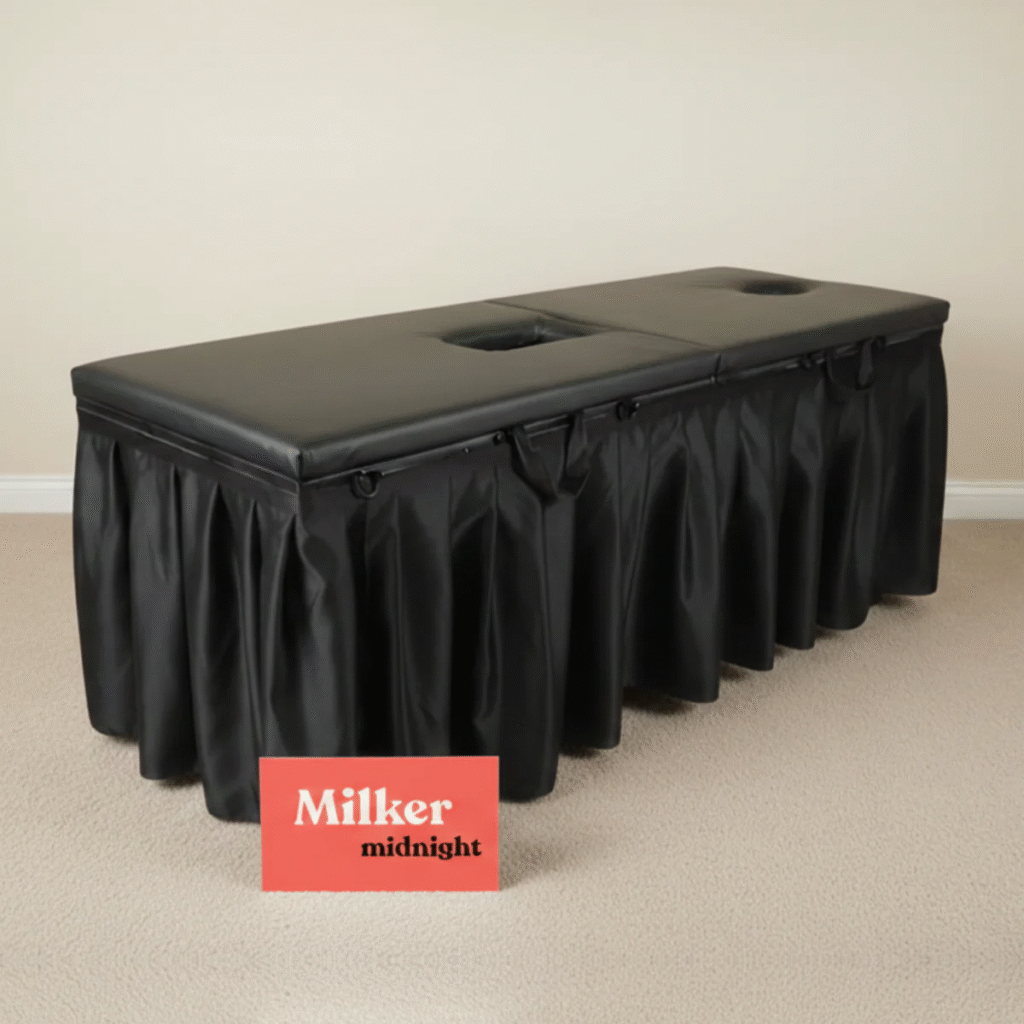
Why instability causes most furniture injuries
Most minor furniture injuries happen for simple reasons. The piece shifts. A leg lifts. The surface compresses too much. Balance changes unexpectedly.
These problems usually come from:
- weak frames
- loose joints
- narrow legs
- soft padding
- cheap hardware
When furniture moves in ways you don’t expect, your body reacts quickly. That reaction often causes slips, awkward landings, or muscle strain.
A stable table removes those surprises. It stays still when you get on or off. It doesn’t rock when weight shifts. That consistency reduces the chance of sudden movements that lead to injury.
A rigid frame prevents flex and collapse
The frame does most of the safety work.
A milking table has an open center, so the weight travels along the sides. If those side rails bend or twist, the whole surface feels unstable.
A strong frame, usually steel or heavy-duty metal keeps the structure rigid. It resists flex and spreads weight evenly across the legs.
This matters because flexing creates a chain reaction:
- the surface dips
- your balance changes
- you adjust quickly
- the table moves again
That cycle increases the chance of slips or strains.
A rigid frame stops that cycle. The surface stays level and predictable, which keeps your posture more natural and controlled.
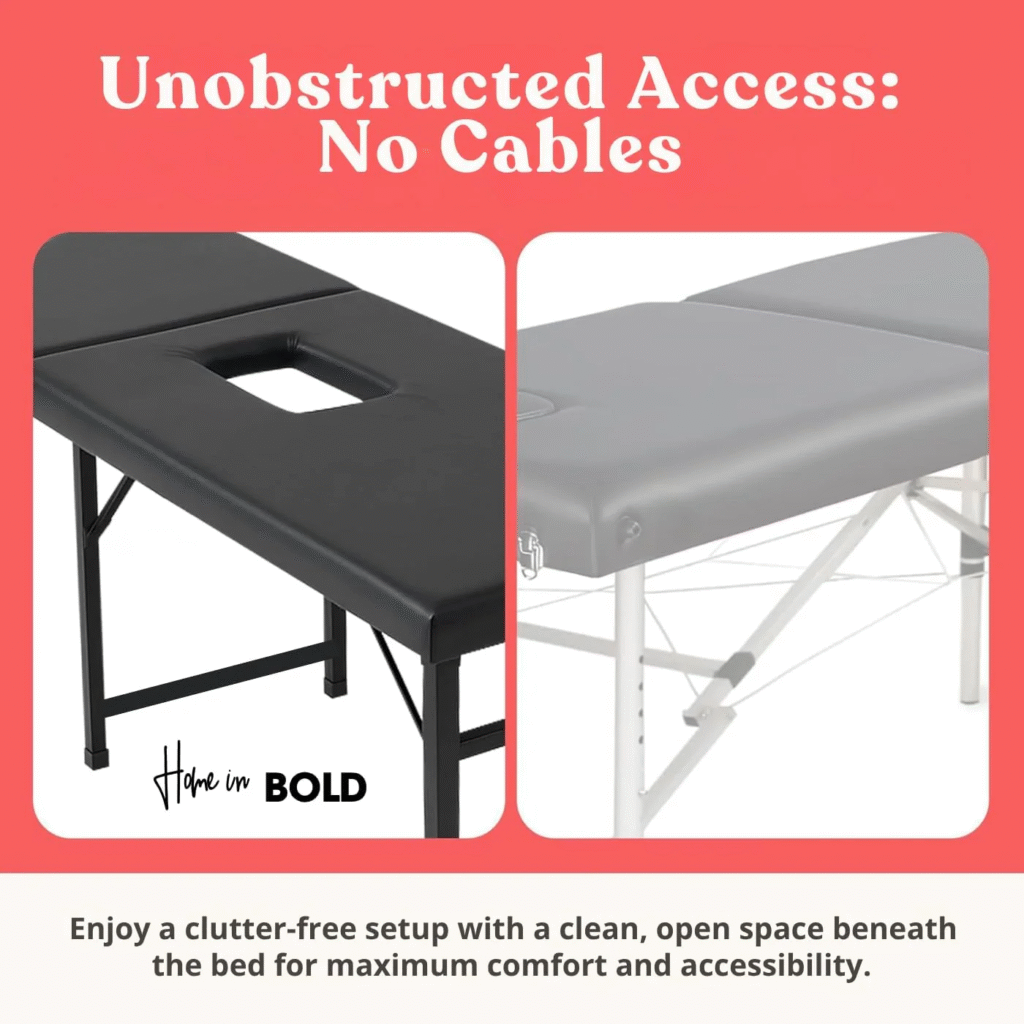
Wide legs and a low center of gravity reduce tipping
Tipping risk depends heavily on the base of the furniture.
Narrow or tall pieces tip more easily because their center of gravity sits higher. Small side movements create larger shifts at the top.
A milking table sits lower and uses a wider stance. This design spreads weight closer to the floor and increases overall balance.
Wide legs help in three ways:
- reduce side-to-side rocking
- improve grip on the floor
- make the table harder to tip
When the base stays planted, you don’t need to constantly adjust your balance. Less adjustment means fewer chances for missteps or awkward movements.
Firm padding supports the body properly
Padding affects safety more than many people realize.
Very soft foam feels comfortable at first, but it compresses quickly. That compression can make your body sink unevenly. When you shift position, the foam rebounds and changes your balance.
This creates instability and forces your muscles to compensate.
High-density foam works better. It stays firm and distributes weight evenly. You feel supported instead of sinking.
Firm support helps:
- maintain steady positioning
- reduce sliding
- prevent pressure points
- improve control during movement
A stable surface keeps your body aligned and reduces strain on joints and muscles.
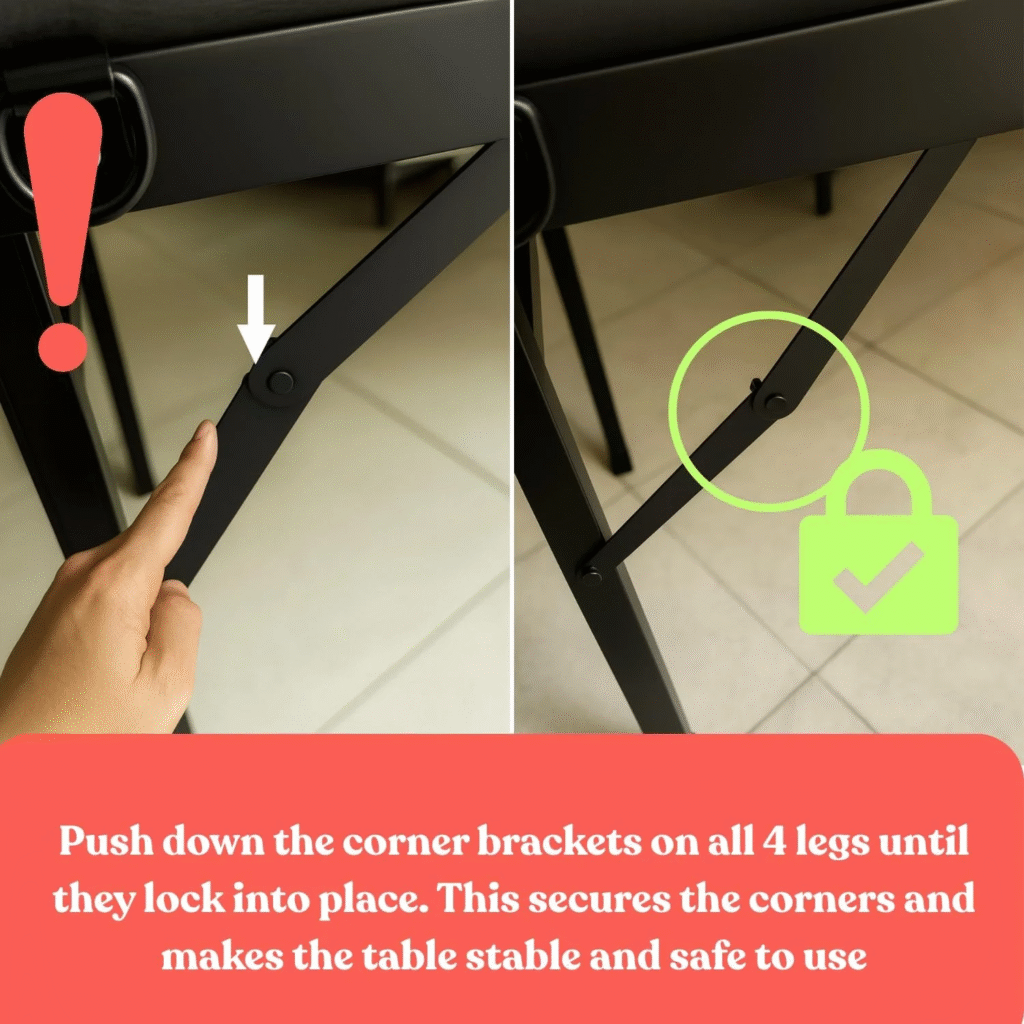
Strong joints and hardware prevent sudden failure
Even a strong frame can feel unsafe if the joints are weak.
Corners, hinges, and bolts take the most stress. Cheap hardware loosens over time and creates wobble.
Once joints move, the entire table becomes less predictable.
Look for:
- reinforced corner brackets
- tight welds or bolts
- metal hinges
- secure locking mechanisms
A properly locked folding table should feel like one solid piece. It should not creak or shift when pressure changes.
Reliable hardware prevents sudden collapses or unexpected movement, which are common causes of minor injuries.
Materials and construction work together
Frame strength, joints, padding, and surface materials all connect. Weakness in one area affects the rest.
For example:
- thin metal bends
- soft foam shifts weight
- loose hinges create sway
Together, these issues increase risk.
If you want a deeper breakdown of how poor construction leads to instability, our guide on common safety mistakes with cheap sex furniture explains the most frequent build problems and how to avoid them. Understanding those mistakes helps you choose safer, more durable furniture from the start.
Better materials create a more predictable experience. Predictability is one of the biggest safety advantages.
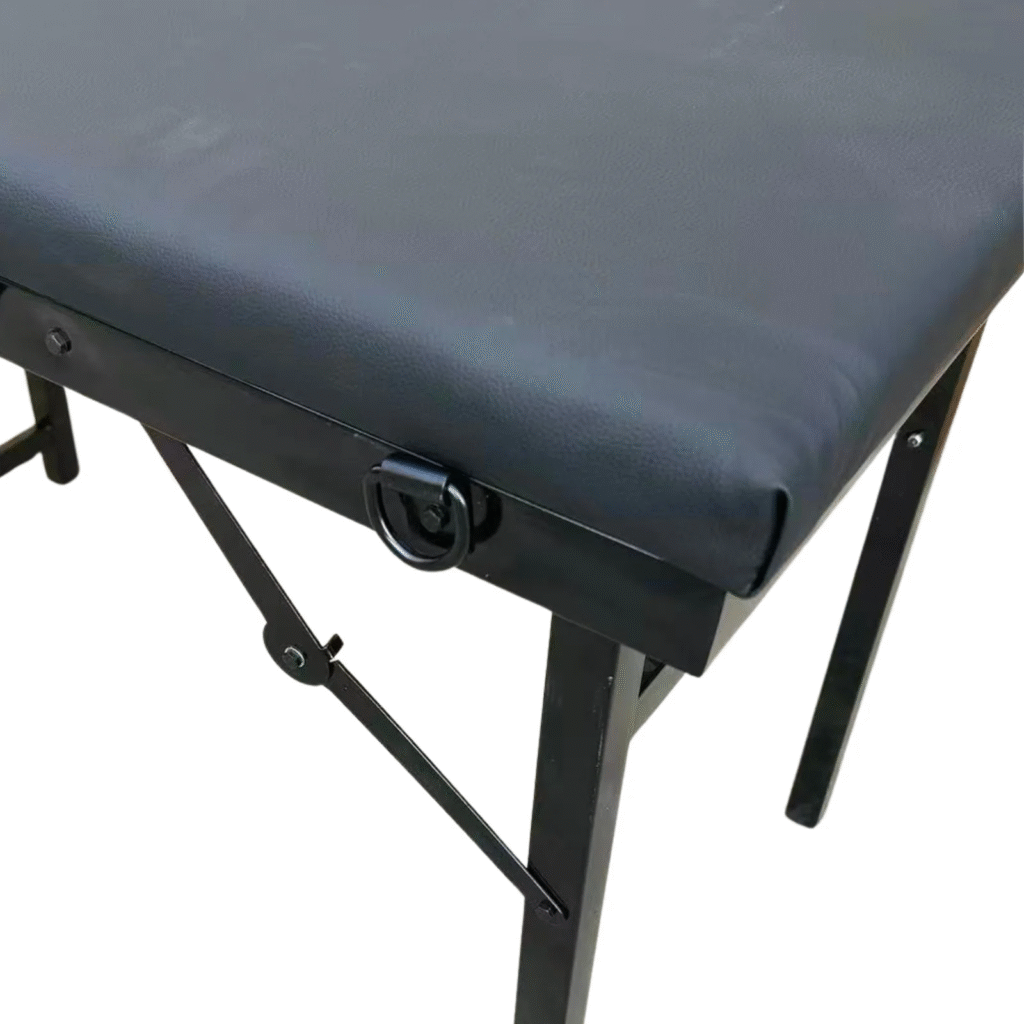
A practical example of safer construction
A well-built table focuses on structure first.
For example, the Home in Bold Milker: Midnight Edition uses a rigid steel frame, wide leg stance, and firm PU leather surface. The frame stays supported along the perimeter while keeping the underside open. The folding mechanism locks securely for storage but feels solid during use.
You can review the full construction and dimensions on the Home in Bold milking table product page to see how the materials and layout support stability.
This type of build behaves more like real home furniture than lightweight novelty pieces.
Safe use still matters
Even the best construction can’t prevent every issue. Proper use also plays a role.
A few simple habits improve safety:
- move slowly and deliberately
- keep weight centered
- avoid jumping or sudden impacts
- check hinges and legs before use
- place the table on a flat surface
Treat the table like a sturdy bench or massage table, not a step stool or platform.
Good design plus careful use creates the safest setup.
Conclusion
Most milking table injuries come from poor construction, not the table itself. Weak frames, loose joints, soft padding, and narrow bases create instability that leads to slips or strain.
A properly built table with a rigid steel frame, strong hardware, and firm support stays steady and predictable. That stability helps prevent unexpected movement and reduces the chance of injury.
When you focus on materials and build quality first, you end up with furniture that feels solid, safe, and reliable for everyday home use.