
If you’re researching milking table materials, the short answer is simple: safety and durability come from a steel frame, reinforced joints, dense padding, and an easy-clean surface. Strong materials prevent wobble, reduce flex, and help the table stay stable over time. Cheap tubing, weak hinges, or soft foam often lead to instability and early wear.
In other words, the materials determine whether a table feels solid like real furniture or flimsy like temporary equipment. This guide explains which components matter most, what to avoid, and how better construction improves long-term safety at home.
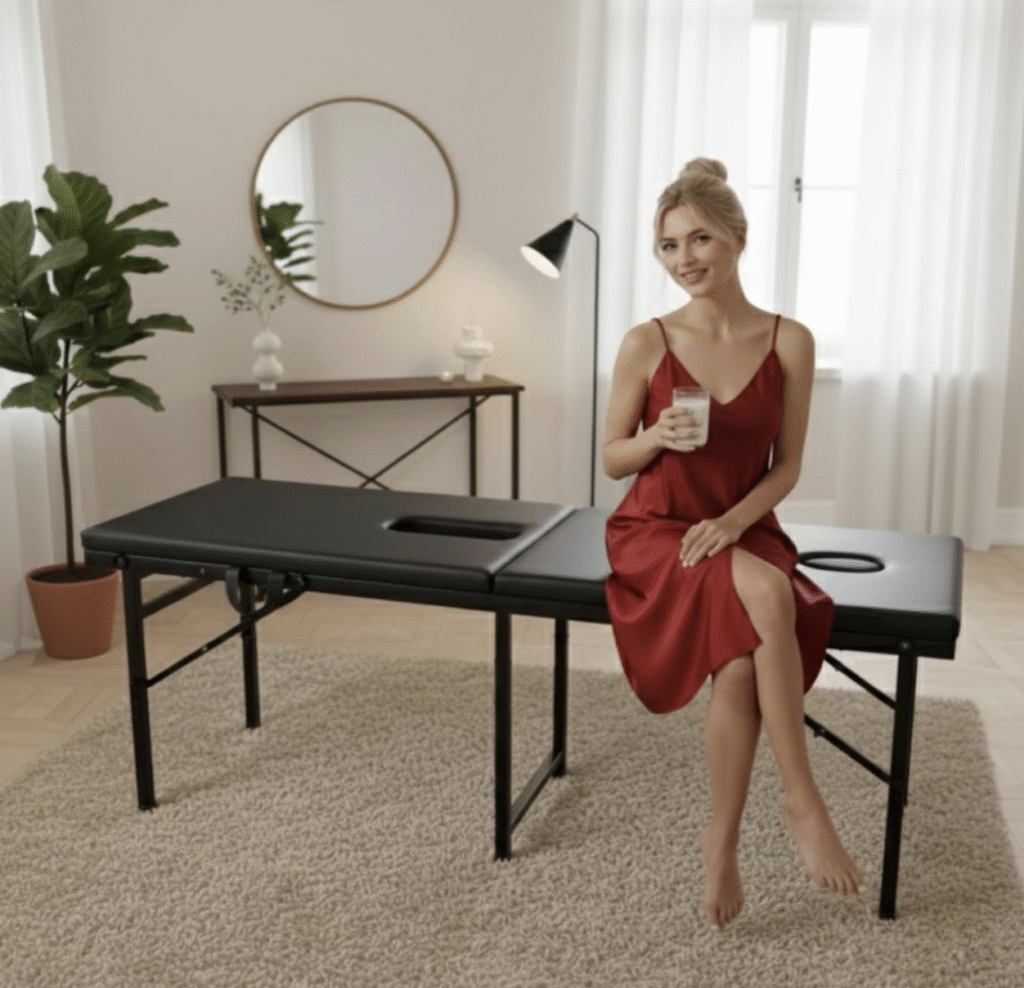
Why materials matter more than design alone
A milking table has a unique structure. The open center removes the usual supports found in benches or chairs. That means the materials must carry more stress along the edges.
Even a smart design will fail if the frame bends or the joints loosen. Strength starts with what the table is made from.
Good materials improve:
- stability
- load support
- lifespan
- surface hygiene
- day-to-day comfort
They also reduce small movements like squeaks or flexing, which can make a table feel unsafe.
If you’re also comparing how strength and capacity affect stability, our guide on milking table weight limits and stability explained breaks down how materials and frame design work together to support weight safely.
Frame materials: steel vs lightweight metals
The frame does most of the work. It supports body weight, absorbs movement, and keeps the table level.
For most home use, steel is the most reliable option.
Steel frames offer:
- higher rigidity
- less flex under pressure
- better long-term durability
- stronger joints and welds
When weight shifts from side to side, steel resists twisting. This keeps the surface steady and predictable.
By contrast, very thin aluminum or lightweight tubing can feel springy. Over time, this may lead to wobble or loose connections.
For example, the Home in Bold Milker: Midnight Edition uses a foldable steel frame with reinforced side rails. This heavier structure helps the table stay planted during use. You can review the full construction and specifications on the Home in Bold milking table product page, which shows how the frame supports weight along the perimeter rather than the center.
In short, a rigid frame usually matters more than saving a few pounds of weight.
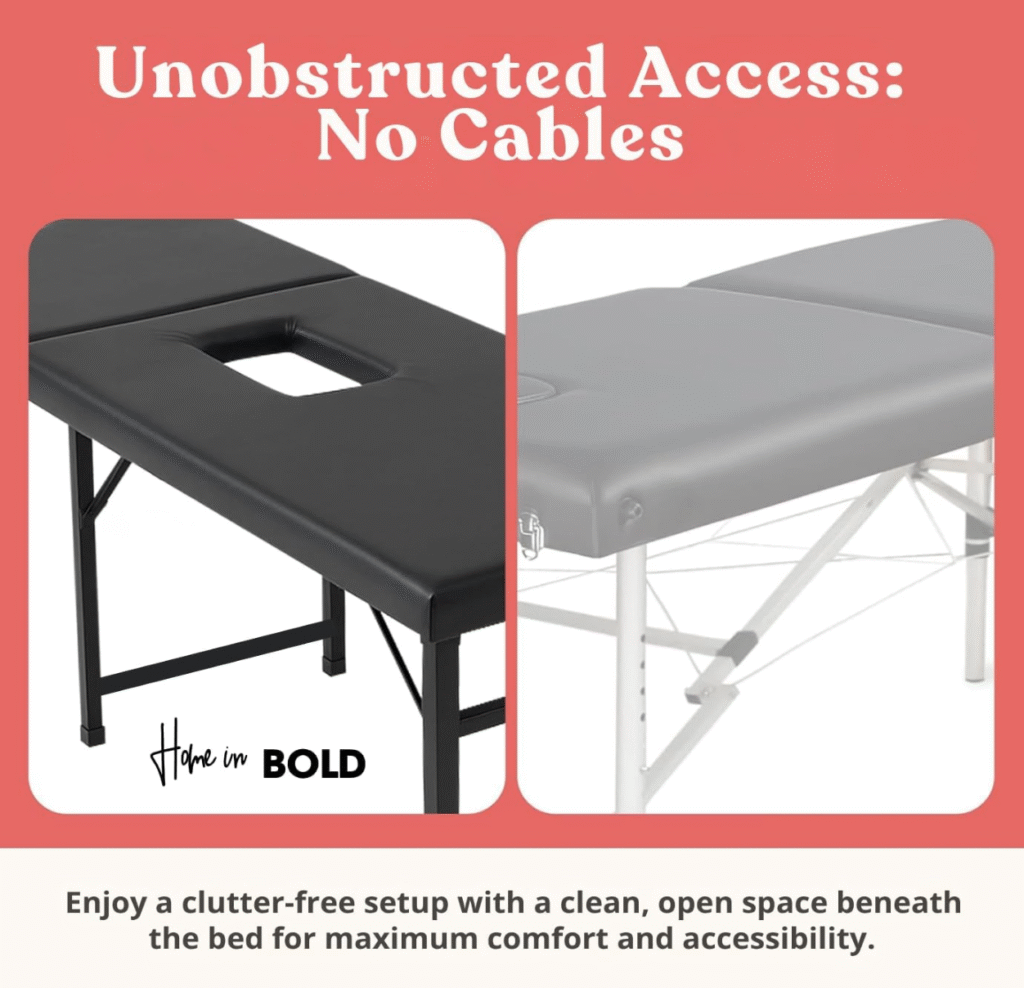
Joints, hinges, and hardware
Strong materials alone are not enough. The connection points often fail first.
Corners and hinges handle the most stress because movement concentrates there. If these parts feel loose or thin, the entire table will feel unstable.
Look for:
- reinforced corner brackets
- tight welds or bolts
- metal hinges (not plastic)
- secure locking mechanisms
A good folding table should lock firmly into place. Once opened, it should feel like one solid piece, not two parts connected by a hinge.
Cheap hardware often causes:
- creaking
- side-to-side sway
- uneven legs
- premature wear
These small issues add up quickly. Solid hardware keeps the table consistent for years.
Padding and surface materials
The top surface affects both comfort and safety. The wrong materials can make a stable frame feel less secure.
Foam density
High-density foam works best. It feels firm but comfortable. It supports weight evenly and keeps you from “bottoming out” against the frame.
Very soft foam compresses too much. This can make the table feel unstable because your body shifts more during movement.
Upholstery
Most quality tables use PU leather or vinyl. These materials offer practical benefits:
- easy to wipe clean
- resistant to moisture
- durable under friction
- consistent texture
A smooth, slightly firm surface also improves control. Excessively slick or overly soft materials can make repositioning harder.
Durable upholstery also prevents cracking or peeling, which extends the life of the table and keeps it looking like regular furniture rather than worn equipment.
Legs, feet, and floor contact
Stability depends on how the table meets the floor.
Wide legs create a larger footprint. This lowers the center of gravity and reduces tipping. Narrow legs or thin feet increase rocking.
Look for:
- wide stance
- thick leg tubing
- non-slip feet
- even height adjustment
Rubber or textured feet help the table stay in place on tile or hardwood floors. Bare metal feet may slide more easily.
These details sound small, but they make a big difference in everyday use.
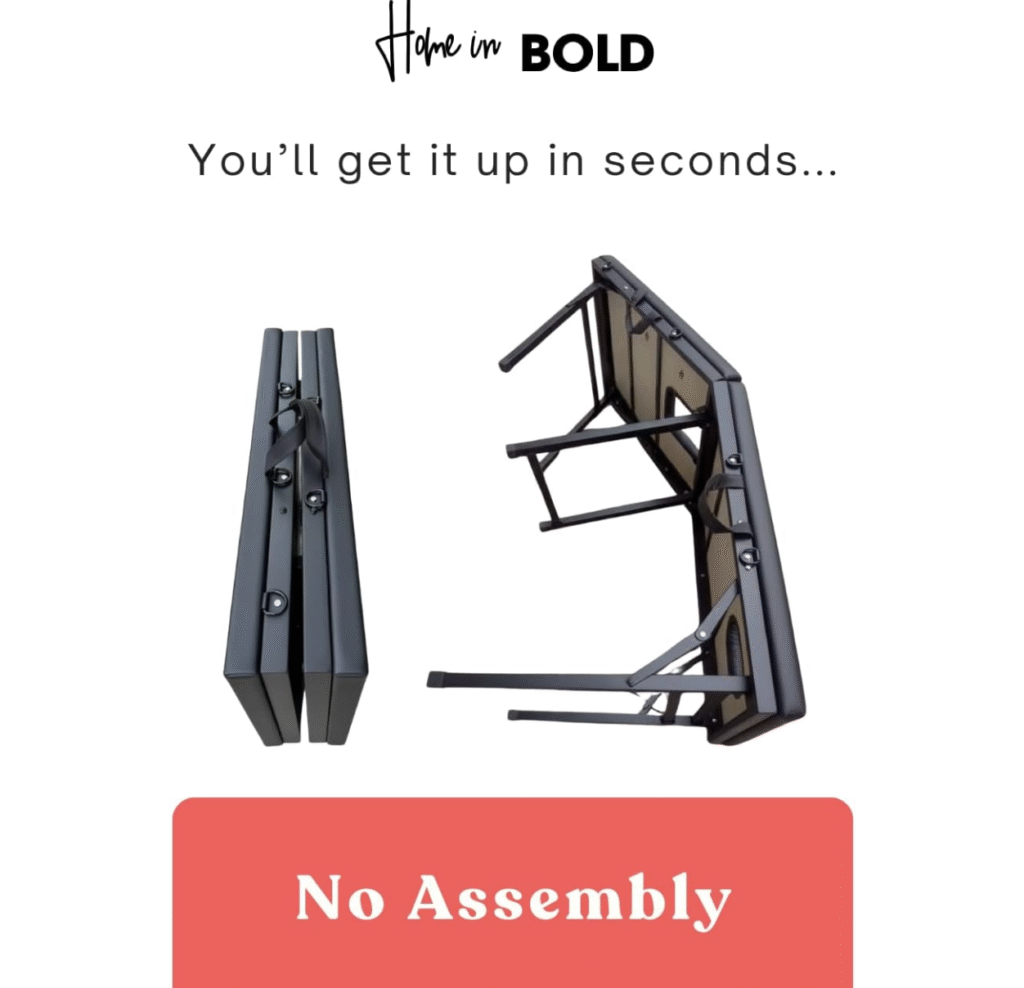
How materials affect long-term safety
Durability and safety connect closely.
As materials wear down, stability decreases. Loose joints, sagging foam, or bent legs change how the table behaves.
Better materials slow this process.
A strong steel frame and dense padding keep their shape longer. Solid hinges stay tight. Durable upholstery resists tearing. Together, these features help the table feel just as stable months or years later.
Many people think about materials at the same time they evaluate strength and capacity. Frame quality, hardware, and padding all contribute to how much weight the table handles and how steady it feels during movement. Looking at both factors together gives you a clearer picture of overall safety.
What to avoid when shopping
If durability matters, treat these as warning signs:
- thin, lightweight tubing
- plastic connectors
- visible frame flex
- very soft foam
- loose hinges
- unclear material specs
These shortcuts often reduce cost, but they also reduce lifespan and stability.
Instead, choose tables built with solid metals, reinforced joints, and practical, easy-clean surfaces.
Conclusion
The best milking table materials focus on strength, not novelty. A steel frame, reinforced hardware, dense foam, and durable upholstery create a table that feels stable, comfortable, and long-lasting.
When the materials are right, the table behaves like real furniture. It stays solid under normal use and holds up over time.
If you prioritize construction quality first, you will usually end up with a safer and more reliable table for your home.