
Reverse Cowgirl Made Better: How a Ramp Transforms This Position
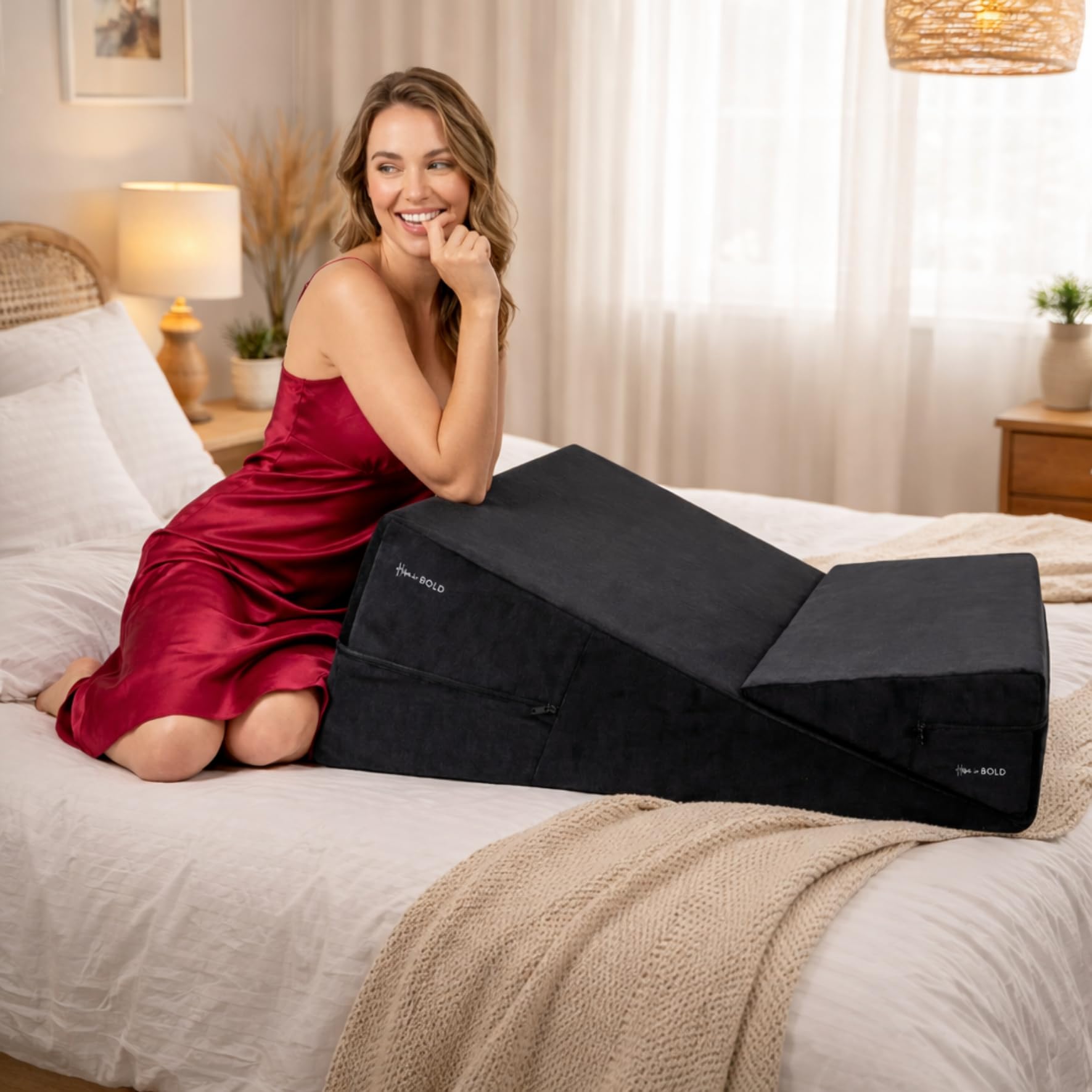
Reverse cowgirl — the top partner facing away from their partner — has a geometry problem. The penetration angle in standard reverse cowgirl can be awkward, particularly when the top partner’s body weight creates an angle that’s uncomfortable for the bottom partner. The ramp fixes this by elevating the bottom partner’s upper body, which changes the entry angle significantly and makes the position work for both people rather than primarily for the top partner’s visual.
The Standard Reverse Cowgirl Problem
In standard reverse cowgirl on a flat surface, the bottom partner lies flat and the top partner’s weight comes down at an angle that can create uncomfortable pressure for the penis or strap-on. The top partner’s range of motion is also limited because going too far forward risks injury, and staying upright demands significant quad strength. The visual advantage of the position (for both partners) often outweighs these issues — but they’re real enough that many couples find reverse cowgirl is better in theory than in practice.
See the Wedge & Ramp Combo on Amazon
What the Ramp Changes
When the bottom partner’s upper back and shoulders are elevated on the ramp (with their hips lower), the penetration angle shifts. The entry is now angled forward-downward rather than straight up — which aligns better with the top partner’s body position in reverse cowgirl and removes the awkward pressure point. The bottom partner’s elevated upper body also gives them something to brace against rather than lying passively on a flat surface.
For the top partner, the elevated entry point means they don’t have to sink as deep into a squat to make full contact. Quad strain during sustained reverse cowgirl drops significantly. Leaning forward is also more natural because the angle now works with the body rather than against it.
Reverse cowgirl on a ramp is a position that often surprises couples — the improvement over the flat version is larger than expected, and it makes a position that often gets abandoned feel genuinely good for both people. See the combo on Amazon.
Setup Details
Position the ramp on the bed with the high point toward the headboard. The bottom partner lies with their upper back on the high end of the ramp, shoulders elevated, hips lower toward the foot of the bed. The top partner straddles facing toward the foot of the bed (standard reverse cowgirl orientation).
Experiment with the bottom partner’s leg position — bent knees with feet flat on the mattress gives them something to push against; legs extended is more passive. The ramp handles the support regardless.
For the standard cowgirl version of this modification, see our article on cowgirl with a wedge. For a full overview of position modifications, see best sex positions with a wedge.
Get the Wedge & Ramp Combo
Frequently Asked Questions
Is reverse cowgirl on a ramp safe for the penetrating partner?
The ramp’s angle reduces the awkward forward pressure that makes reverse cowgirl risky for the penis on a flat surface. The top partner should still avoid extreme forward lean. Communication about what feels comfortable for the bottom partner is important.
Can I use the wedge instead of the ramp for reverse cowgirl?
The wedge under the hips (rather than upper back) changes the angle differently — it works better for forward-facing cowgirl. For reverse cowgirl, the ramp’s full-body incline is more useful than the wedge’s point support.
Does reverse cowgirl on the ramp work with a strap-on?
Yes — the angle benefits apply equally. The elevated upper body of the bottom partner and the adjusted approach angle work the same way regardless of what’s doing the penetrating.
What if the ramp slides on the mattress?
In reverse cowgirl the bottom partner’s weight pins the ramp in place more effectively than in some other positions. If sliding is an issue, a non-slip mat under the ramp or a textured mattress cover helps.
How high should the ramp be for reverse cowgirl?
Standard ramp dimensions (10–12 inches at the high end, 24–28 inches long) create the right angle for most body combinations. The key is that the bottom partner’s upper back is meaningfully elevated — a few inches higher than their hips.