
Sex After Hip Replacement: Safe Positions and What to Avoid
By Jake Turner · Senior Editor · December 2025
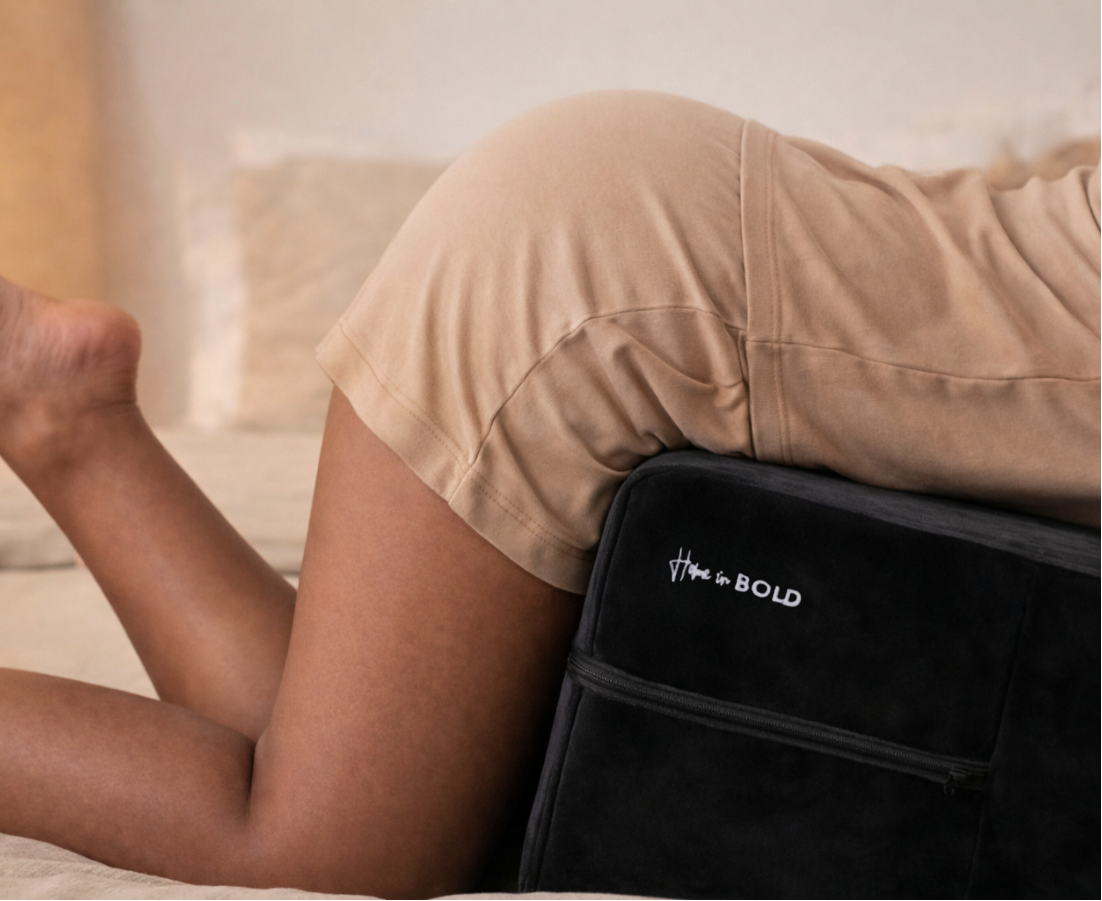
Around 450,000 total hip replacements are performed in the US annually, and sexual activity is one of the most common questions patients have in recovery — and one of the least thoroughly answered in standard discharge instructions. The rules aren’t complicated, but violating them risks dislocation of the prosthetic joint. This guide covers exactly which movements to avoid, which positions are safe, and how a positioning aid helps you stay within safe range of motion.
In This Article
Hip Replacement Precautions That Apply to Sex
Standard posterior approach hip replacement comes with three core precautions designed to prevent dislocation: no hip flexion beyond 90 degrees, no internal rotation of the operated leg, and no crossing the legs past the body’s midline. These restrictions typically apply for 6–12 weeks. The Hospital for Special Surgery’s rehabilitation guidelines are specific about which movements create dislocation risk. In sex, the positions that most commonly violate these are: missionary with the operated leg pulled back toward the chest (exceeds 90 degrees of flexion), and any position requiring the operated leg to cross the midline. The anterior approach procedure has fewer restrictions — confirm with your surgeon which approach was used, as this significantly affects your sex position options.
For people who were dealing with hip pain before replacement, there’s also the matter of relearning movement. Our guide to sex with hip pain covers the pre-replacement experience — the post-replacement reality is different but related.
When You Can Resume
Most orthopaedic surgeons clear patients for sexual activity at 6–8 weeks post-op, provided they’re comfortable and mobile. The key guidance: the operated hip must not be placed in any restricted position during sex. Mayo Clinic’s hip replacement recovery guide notes that most patients return to most daily activities within 6 weeks, but individual recovery varies. If you had a complex revision or there were intraoperative complications, your surgeon’s specific guidance overrides all general advice.
Safe Positions and Why They Work
Operated partner on top (cowgirl-style): This gives the person with the replacement full control over hip angle, allowing them to keep the joint within safe range. The hip flexes to comfortable position rather than being pushed. Side-lying (spooning): Both partners on their sides, the operated partner in front. The operated hip remains in neutral — no significant flexion or rotation required. Operated partner on their back, modified missionary: Safe only if the hips stay below 90 degrees — meaning the legs should NOT be pulled up toward the chest. A wedge under the hips slightly elevates the pelvis without increasing flexion angle, making penetration easier while keeping the hip safe. See our spooning position guide for detailed setup.
How a Wedge Keeps You Within Safe ROM
A wedge under the operated partner’s hips does something important: it achieves pelvic elevation (improving penetration angles and access) without requiring hip flexion increase. You don’t need to pull the legs back — the wedge does the work. The result is better positioning with zero additional joint stress. This is particularly useful in the 6–12 week period when prosthesis is still integrating with surrounding tissue and dislocation risk is highest. After that period, most restrictions ease — but the wedge remains useful simply as a comfort and access tool for the long term.
| Position | Hip Flexion Required | Dislocation Risk | Post-Replacement Safe? |
|---|---|---|---|
| Missionary (legs pulled back) | High (>90°) | High | No — avoid |
| Doggy style, operated hip passive | Moderate | Medium | Caution — check with surgeon |
| Cowgirl (operated on top) | Self-controlled | Low | Yes — good option |
| Spooning (operated in front) | Minimal | Very low | Yes — recommended |
| ⭐ Modified missionary + wedge under hips | Low (stays <90°) | Very low | Yes — our top recommendation |
See the Wedge & Ramp Combo on Amazon
Always confirm your specific restrictions with your orthopaedic surgeon — anterior approach hip replacements have significantly fewer precautions than posterior approach. What applies to one patient does not apply to all.
Related Articles
Our Pick: Wedge & Ramp Combo Set
Pelvic elevation without flexion increase · firm foam · washable cover
Frequently Asked Questions
Jake Turner
Senior Editor · GloryHoleToGo
Jake has spent over a decade reviewing sexual wellness products, positioning aids, and intimacy furniture. His recommendations draw on hands-on product testing, consultation with certified sex therapists, and analysis of thousands of verified buyer reviews.