
Sex Positioning for Limited Mobility: A Practical Guide to What Works
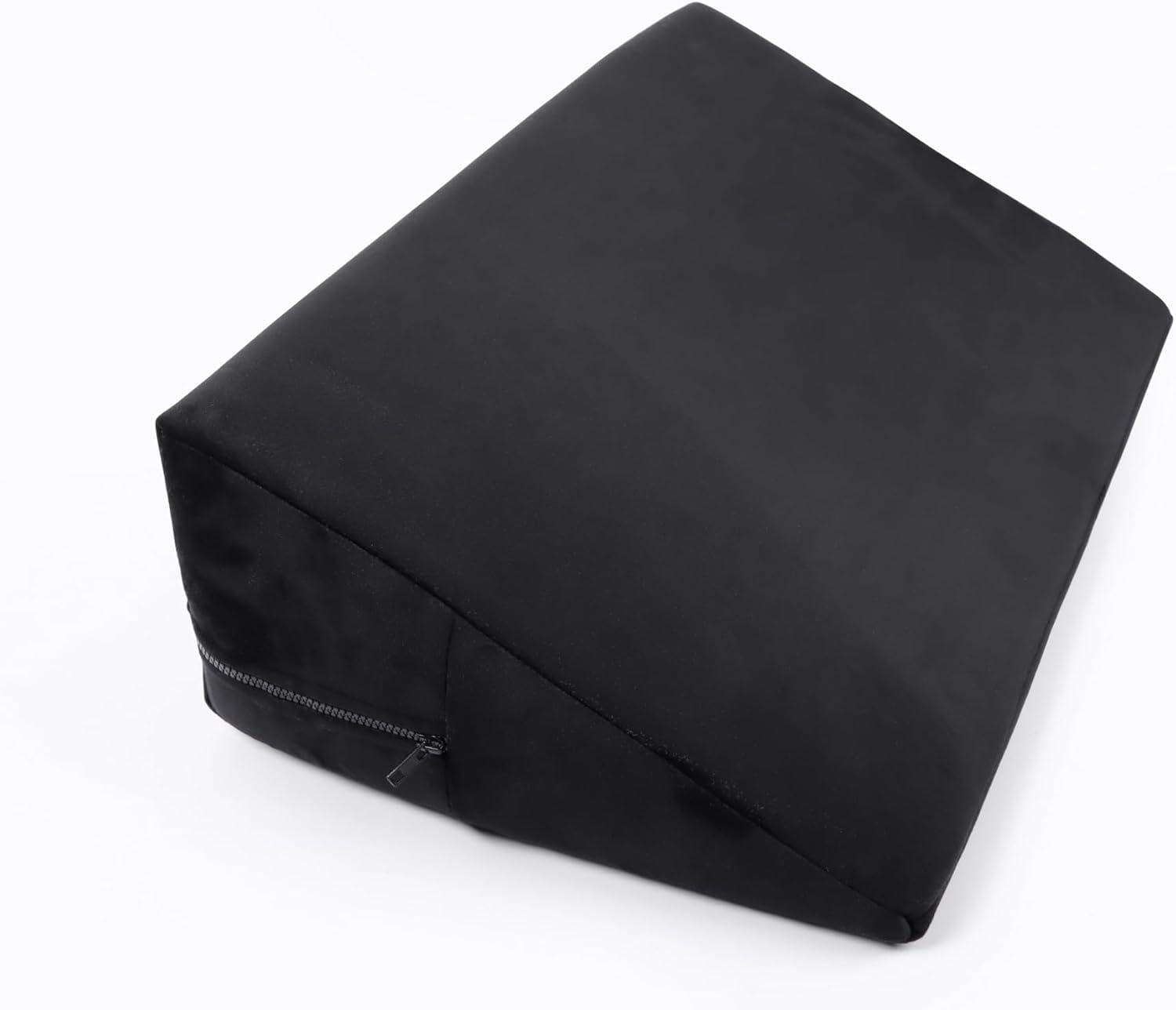
Limited mobility — from injury, disability, chronic illness, aging, or recovery — creates genuine challenges in the bedroom that deserve direct, practical answers rather than vague encouragement. The positions that require kneeling, sustained hip flexion, weight-bearing, or full-range-of-motion are the ones that become inaccessible first. A positioning wedge addresses the specific mechanical problems these positions create, often reopening options that mobility limitations had closed.
Understanding the Specific Mobility Challenge
Not all limited mobility is the same, and the useful positions depend on what’s limited. Someone with a spinal cord injury has different needs than someone recovering from knee surgery, someone with cerebral palsy, or someone with multiple sclerosis. The common threads are: reducing the need to hold positions under load, minimizing joint strain, supporting the body at an angle without requiring active muscular effort, and enabling participation without having to choose between enjoyment and pain.
The positioning wedge addresses all of these through passive support — the foam holds the position; the person doesn’t have to. This is the fundamental shift that makes positioning furniture useful for limited mobility rather than just for variety.
See the Wedge & Ramp Combo on Amazon
Position Recommendations by Mobility Scenario
One partner significantly less mobile: The less mobile partner as the receiving partner on the ramp is usually the most accessible configuration. Lying along the ramp requires almost no active positioning from them. The ramp holds their body; the more mobile partner does the physical work of positioning. This preserves intimacy and participation without requiring the less mobile partner to bear weight or hold a position.
Both partners with limited mobility: Side-lying (spooning) with a wedge between knees is the lowest-effort position for both partners. No weight-bearing, no sustained joint angles, good contact. Both partners can participate with minimal muscular demand.
Wheelchair users: Edge-of-bed positions — where one partner is seated at the edge and the other stands or kneels — are often more accessible than fully on-mattress positions. A wedge under the sitting partner’s hips elevates them for better angle alignment. The ramp propped against the bed edge can serve as support for the standing partner’s positioning.
Positioning furniture designed for intimacy is one of the most practical tools for expanding sexual accessibility — the passive support it provides is exactly what limited mobility situations require. See it on Amazon.
Communication Is the Other Half
Position modifications work best when both partners are explicit about what’s comfortable, what triggers pain or spasm, and what to do if something needs to stop. A clear “pause” signal — a word, a tap — removes the anxiety of having to perform through discomfort and makes both partners more present during the experience.
For specific conditions: our articles on sex with arthritis, sex with fibromyalgia, and intimacy after medical recovery address the condition-specific angles in more detail.
Get the Wedge & Ramp Combo
Frequently Asked Questions
Can a positioning wedge help with spasticity or involuntary muscle movement?
Passive positioning that doesn’t require fighting against spasticity is better than positions that trigger it. A wedge that holds a comfortable angle without needing to be actively maintained reduces the muscular demands that can trigger or worsen spasticity in some conditions.
Is the ramp better than the wedge for limited mobility use?
Often yes — the ramp provides full-body support rather than just hip support. For the receiving partner with significant mobility limitations, lying along the ramp requires the least active participation. The wedge is more useful when only hip positioning needs adjustment.
Are there occupational therapists who specialize in intimacy and disability?
Yes — sexual health is a recognized area of occupational therapy practice. An OT with this specialization can provide personalized positioning guidance specific to a person’s disability profile, which is more targeted than general guidance.
Can both partners use the wedge simultaneously?
In some configurations, yes. Side-lying with the wedge between knees supports both partners simultaneously. In face-up/face-down pairings, one partner uses the wedge and the other benefits from the changed angle without direct contact with the foam.
Does limited mobility need to be disclosed for intimacy to work?
Open communication about what’s physically accessible makes intimacy significantly better for both partners. Framing it as “here’s what works best for my body” rather than as an apology is both more accurate and more effective at producing good outcomes.