
Sex Ramp for Deeper Penetration: How Angle Changes Everything
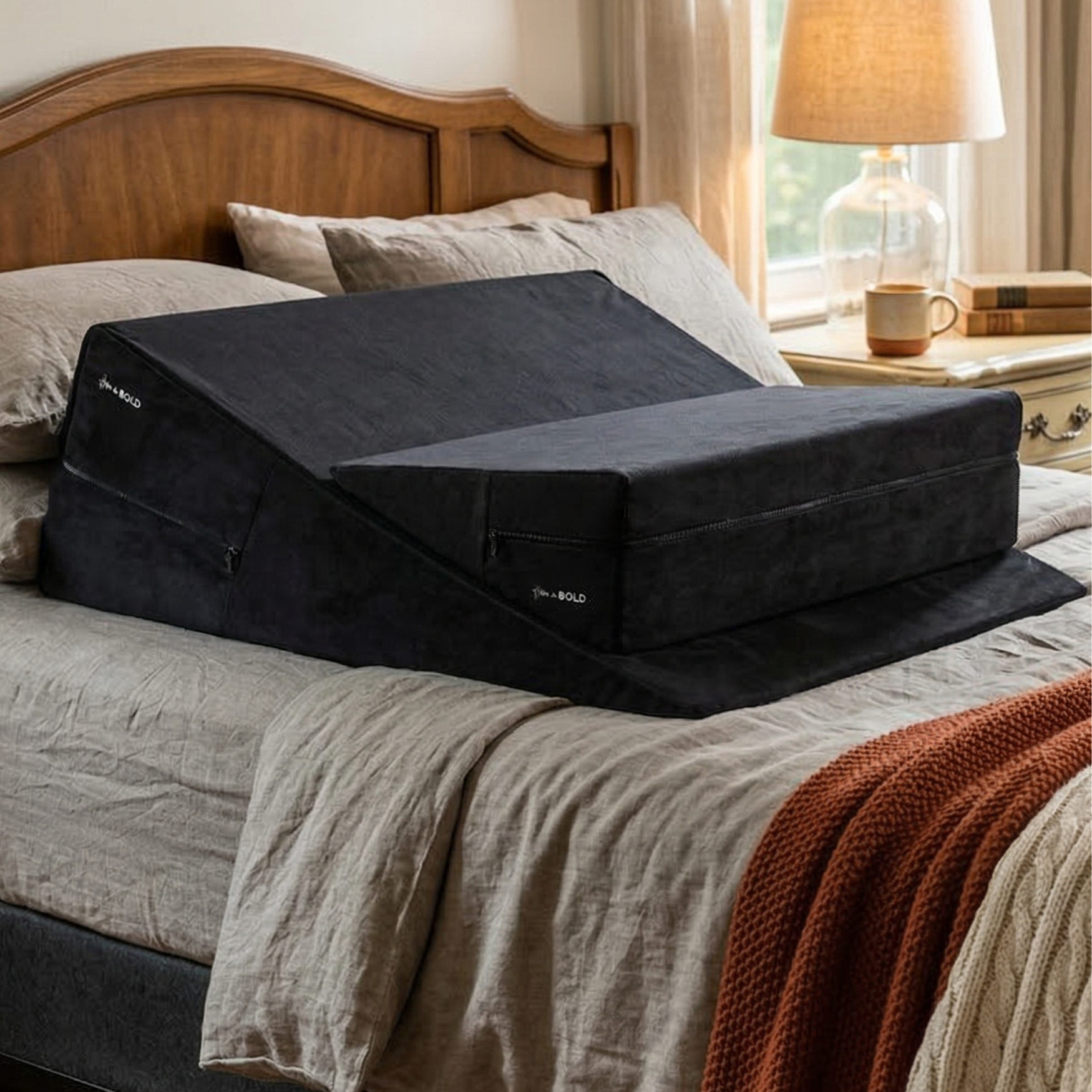
Deeper penetration is one of the most common things couples look for in sex positioning furniture. The reason most people don’t achieve their preferred depth isn’t anatomical — it’s geometric. On a flat surface, penetration happens at a relatively horizontal angle that limits how far into the vaginal canal the penetrating partner can reach. Changing the angle with a ramp changes the depth available without anyone needing to be more flexible, stronger, or in a different position.
Why Angle Is the Primary Variable
The vaginal canal runs at an angle roughly toward the lower back when the person is lying flat. Penetration from a horizontal angle therefore hits the front wall quickly rather than following the natural path. Tilting the receiving partner’s pelvis upward — so the vaginal opening is angled toward the penetrating partner rather than parallel to them — means penetration follows the natural angle of the canal.
The result is more depth with less resistance, more consistent contact with the areas that matter, and positions that would feel shallow on a flat surface suddenly feeling deeply satisfying.
Ramp Configurations for Maximum Depth
Receiving partner over the ramp, rear entry: The receiving partner lies chest-down with their hips at the high end of the ramp. Hips are elevated, pelvis angled. The penetrating partner enters from behind at a downward angle that follows the natural canal direction. This is the deepest-feeling configuration most couples can achieve.
Wedge under hips, missionary: Simpler than the ramp configuration, but effective. The wedge under the receiving partner’s hips tilts the pelvis upward, creating the angle change that increases depth in face-to-face positions.
Ramp elevated, partner on top: Placing the ramp under the lying partner’s upper back creates an incline that changes the angle for partner-on-top positions. The lying partner is elevated, which changes the natural resting angle for the person on top.
Important Notes on Depth and Comfort
Maximum depth isn’t always the goal. For some couples, deeper penetration contacts the cervix, which is uncomfortable for the receiving partner. If you’re increasing depth intentionally, communicate throughout the session and adjust the ramp position to find the angle that maximizes pleasure without discomfort.
The ramp creates angles that no flat surface can replicate — couples consistently report significantly greater depth. See it on Amazon.
Combining Wedge and Ramp
Stacking the wedge on top of the ramp at the receiving partner’s hips creates a compound angle that’s the most extreme configuration available. This creates the maximum pelvic tilt and depth. It’s a more advanced setup — start with the basic ramp or wedge positions before adding this level of angle.
Try the Wedge & Ramp Combo
Frequently Asked Questions
Will a sex ramp hurt if penetration is already deep?
It can — deeper angles mean more cervical contact. Communication is essential. The ramp gives you fine control over angle; use it to find depth that feels good, not just maximum depth.
Is rear entry with the ramp comfortable for the receiving partner?
Very — the chest-down position on the ramp means the receiving partner is fully supported without holding any position. It’s often described as the most comfortable version of rear-entry sex.
Does the wedge or ramp work better for depth?
The ramp creates more full-body angle change; the wedge creates more targeted hip tilt. For maximum depth, the ramp (or ramp + wedge combo) is more effective.
What if my partner is smaller than average in length?
The angle change from a wedge or ramp is often the solution specifically for this situation. Depth is primarily an angle problem, not a size problem.
How do I know what angle to use?
Start with a single wedge or low ramp configuration and adjust based on feedback. The right angle is the one that feels good to the receiving partner — not necessarily the maximum available.