
Sex After 50: Why a Positioning Wedge Changes Everything
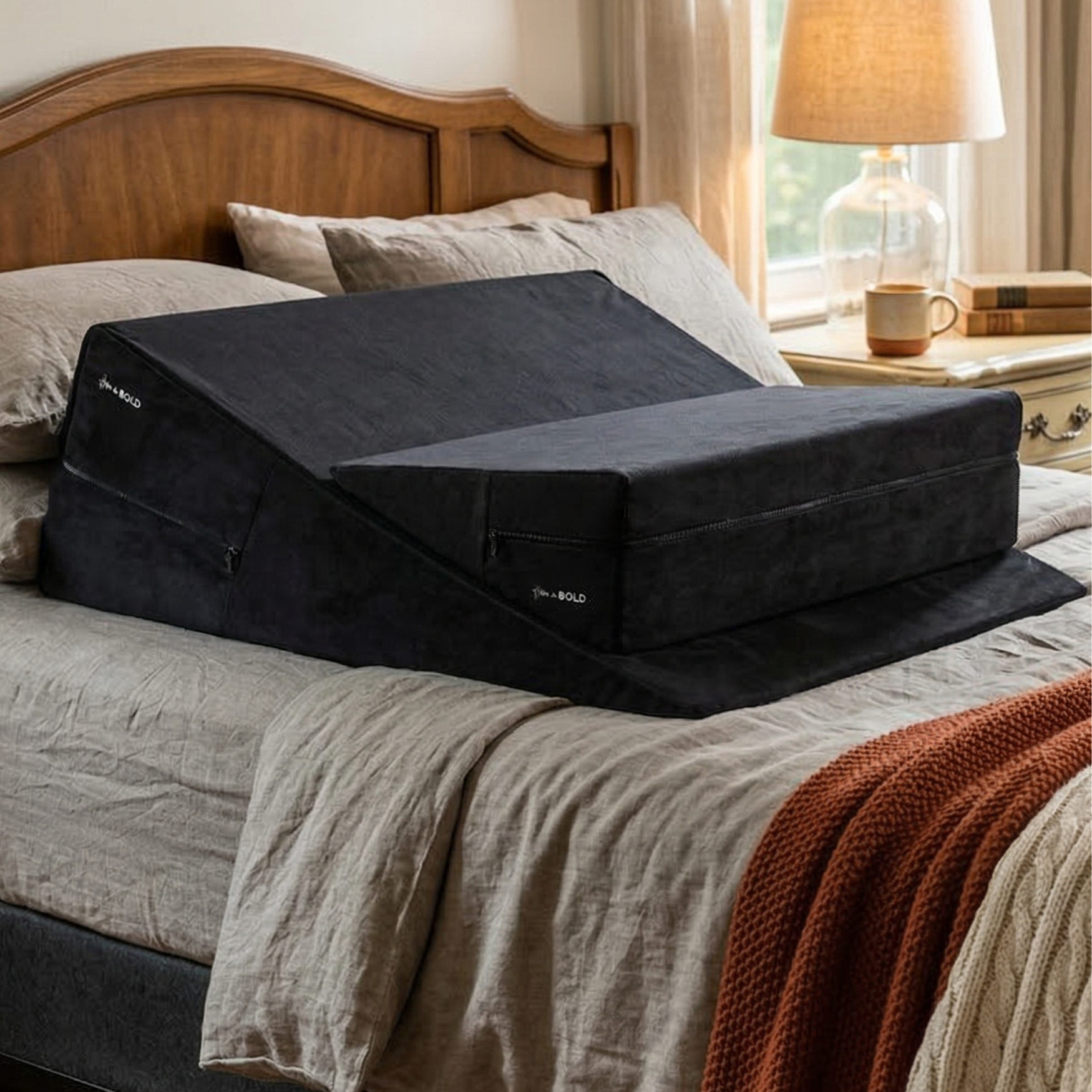
Sex after 50 is genuinely different from sex in your 30s — not worse, but different. The physical changes are real and worth addressing directly. Joint stiffness, reduced flexibility, changing lubrication, hormone shifts, and the slower recovery that comes with age all affect what feels comfortable and what doesn’t. The good news is that these are engineering problems, not desire problems, and engineering problems have solutions.
What Actually Changes After 50
Flexibility decreases. Joints that could sustain unusual angles or sustained loading in your 30s signal discomfort much earlier in your 50s and 60s. Longer warm-up time before sex feels genuinely good — not because desire is lower, but because the body takes longer to become fully aroused and lubricated. Certain positions that felt natural at 30 require real physical effort at 55.
None of this is a decline in sexuality. It’s a change in physical parameters. Couples who adapt to those parameters — who use tools and approaches that work for their bodies now rather than their bodies then — consistently report satisfying, improving intimate lives through their 50s, 60s, and beyond.
How a Positioning Set Addresses These Changes
The wedge and ramp remove the need for sustained physical effort during sex. Positions that previously required maintaining a specific arch, kneeling for extended periods, or holding an angle against gravity are replaced by positions where the foam does that work. Both partners can focus entirely on the experience rather than the physical mechanics of maintaining position.
For couples where one or both partners have joint stiffness, bad knees, hip pain, or back issues that have accumulated over decades of use, this shift is significant. Positions that had been quietly dropped from the repertoire often return as comfortable options.
The Best Configurations for 50+
Receiving partner over the ramp: The most consistently reported favorite for couples over 50. Both partners can be in the least physically demanding configuration possible — one lying on the ramp, one standing or kneeling comfortably behind. The foam handles the angle.
Side-lying with wedge: Low joint load, comfortable for extended periods, naturally intimate body position. Works especially well for couples with hip or back issues.
Missionary with wedge under hips: Both partners lying, angle handled by the foam. The receiving partner is completely passive; the penetrating partner can lie forward rather than kneeling.
Couples over 50 consistently report the positioning set extends their active intimate life significantly — reducing the physical barriers that had been accumulating. See it on Amazon.
Lubrication Becomes More Important
Post-menopause and with age-related hormonal changes in men, natural lubrication decreases and tissues become more sensitive. The positioning set addresses angle and physical effort; a quality lubricant addresses the friction side of the equation. Both are worth investing in. Don’t rely on positioning alone when lubrication is also a factor.
Get the Wedge & Ramp Combo
Frequently Asked Questions
Does sex get worse after 50?
It changes, but couples who adapt report it getting better — more intentional, more connected, more focused on what actually feels good rather than what they thought was expected. The physical changes are manageable.
Is it normal for sex to feel different in my 50s?
Completely normal. Hormone changes, joint changes, and the accumulated effects of time all change the physical experience. Adapting to those changes rather than fighting them is the key to a good intimate life through this decade.
Will a wedge fix my libido issues?
The wedge addresses physical comfort, not libido. If libido is the primary issue, that’s worth discussing with a doctor — testosterone and estrogen levels affect libido significantly in the 50s and are often addressable.
What’s the most common complaint couples in their 50s have about sex?
Physical discomfort — specifically joint pain, limited flexibility, and the effort required to maintain positions. All of which the positioning set addresses directly.
Can sex positioning furniture make up for reduced flexibility?
Yes — this is exactly what it’s designed for. The foam creates and maintains angles that the body can no longer hold on its own. Couples who start using it in their 50s often say they wish they’d had it in their 40s.