
Sex With Sciatica: Positions That Don’t Trigger It and What Actually Helps
Sciatica — pain radiating from the lower back down one or both legs along the sciatic nerve path — is triggered and worsened by specific postures: forward hip flexion, piriformis tension, and sustained positions that compress the nerve or its origin point. Sex involves a lot of those postures. Understanding which positions compress the nerve and which don’t makes the difference between intimacy that’s manageable and intimacy that’s off the table.
What Triggers Sciatica During Sex
For most people with sciatica, the trigger is either direct piriformis compression (sitting on a hard surface or pressing the affected hip into the mattress) or forced hip flexion bringing the knee toward the chest. Missionary with the receiving partner pulling their knees up high is a classic irritant. So is the giving partner hunching forward at an awkward lumbar angle for sustained periods. Positions that put the sciatic nerve’s exit point under compression — particularly anything involving prolonged sitting or deep hip flexion on the affected side — tend to be the ones that cause flare-ups.
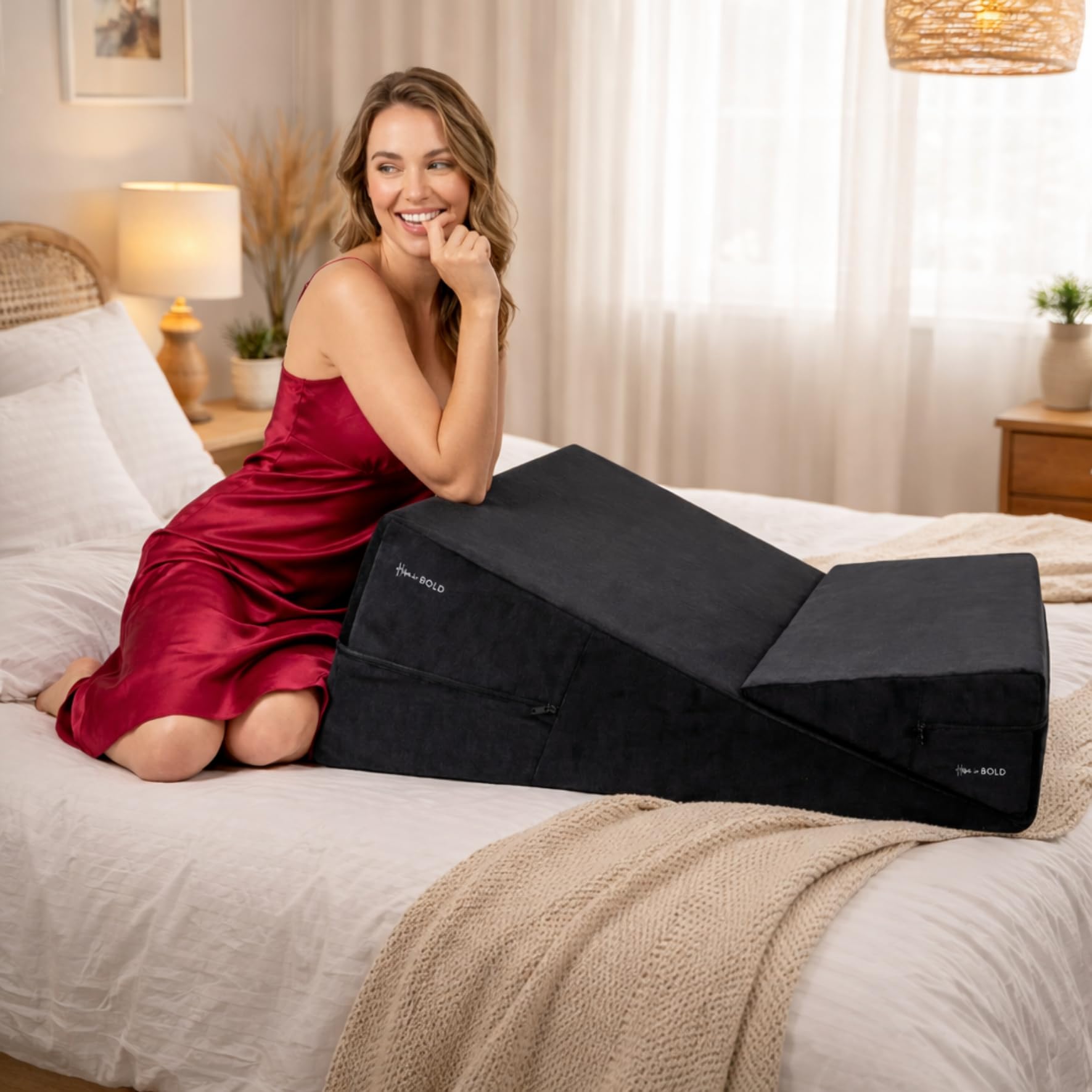
See the Wedge & Ramp Combo on Amazon
Positions That Work Better for Sciatica
Side-lying: With the body in a neutral lateral position, there’s minimal hip flexion and no compression of the affected area. This is usually the lowest-risk starting point for people in an active sciatica flare. A wedge between the knees maintains neutral hip alignment and prevents the top leg from rolling forward and creating torque through the lower back.
Receiving partner on ramp, chest-down, hips elevated: This position avoids deep hip flexion for the receiving partner. The sciatic nerve isn’t being stretched toward its pain threshold. For the giving partner, remaining more upright (rather than hunching over a flat surface) reduces lumbar loading significantly.
Modified missionary with wedge, legs extended: Rather than pulling legs up high — which brings the hip into flexion and can compress the nerve — keeping legs lower and angled by the wedge under the hips achieves pelvic tilt without the flexion. This is a meaningful modification for people who would otherwise avoid missionary entirely.
The ramp’s inclined surface is particularly useful for sciatica — it keeps the receiving partner’s body supported without requiring any held posture that might aggravate the nerve. See it on Amazon.
What to Avoid
Deep squatting positions (cowgirl with deep knee bend) apply direct compression to the piriformis on the affected side. Positions where the receiving partner is on their back with knees pulled toward the chest maximize hip flexion and are a common trigger. For the giving partner, anything that requires sustained forward lean at the lumbar spine is high-risk during a flare.
The general principle: keep hips in a more neutral, extended position and avoid anything that presses the affected area into a surface under load. A positioning wedge addresses both of these by creating the angles needed without requiring the body to hold them. For broader pain-related context, our article on sex with lower back pain covers spine mechanics in more detail.
Get the Wedge & Ramp Combo
Frequently Asked Questions
Can sex make sciatica worse?
Certain positions can — specifically those that compress the nerve at its origin or stretch it along its path. With the right positioning, sex doesn’t have to aggravate sciatica at all. Position choice and body mechanics matter far more than the activity itself.
Should I avoid sex during a sciatica flare?
Not necessarily — but stick to positions that don’t compress or stretch the nerve. Side-lying is usually the safest during an acute flare. Listen to your body, and if something causes pain, stop and adjust.
Which side should I lie on with sciatica?
Generally, lying on the unaffected side is less irritating since it avoids compressing the affected hip and piriformis. A pillow or wedge between the knees prevents the spine from rotating and adding additional tension to the nerve.
Does the ramp or the wedge help more with sciatica?
They help with different things. The wedge modifies hip position in face-up positions; the ramp supports the full body in face-down positions and helps the giving partner avoid the hunching posture that stresses the lumbar spine. Both are relevant depending on your preferred positions.
Can both partners have sciatica at the same time?
Yes, and it’s more common than you’d think in older couples. In that case, side-lying with a wedge between knees — where both partners are in neutral alignment — is usually the most accessible shared option.